
English ![]()

Views: 0 Author: Site Editor Publish Time: 2026-09-24 Origin: Site
Choosing the wrong output capacity can increase costs and limit production growth.
So, is a higher-capacity machine always the better choice?
A PVC sheet production line must match product demand, factory conditions, and future plans.
In this article, we will compare 300 kg/h and 700 kg/h options to help buyers select the right solution.
A PVC sheet production line is a complete manufacturing system designed to transform PVC raw materials into finished plastic sheets. It integrates multiple processing stages to achieve stable output and consistent product quality.
The typical production process includes:
Material mixing and preparation
Material feeding
Plasticizing and extrusion
Sheet forming or calendering
Cooling and shaping
Cutting and stacking
Each section affects the final product performance. For example, unstable feeding can create uneven thickness, while poor temperature control may influence surface quality.
Modern PVC sheet production equipment usually combines extrusion systems, forming units, cooling systems, and automatic handling equipment. Buyers can review complete equipment solutions from KS Bonzer through its PVC production equipment range.
The production capacity of the line determines how much material can be processed within one hour. Therefore, output selection directly affects daily production, labor efficiency, and order fulfillment ability.
The output value represents the approximate amount of PVC material the production line can process per hour.
A 300 kg/h PVC sheet production line can process around 300 kilograms of material every hour under suitable operating conditions. A 700 kg/h line provides more than double the processing capability.
The difference influences:
| Factor | 300 kg/h Line | 700 kg/h Line |
|---|---|---|
| Production volume | Medium output | High output |
| Order capability | Regular production needs | Large-scale orders |
| Investment | Lower initial cost | Higher investment |
| Factory requirement | Smaller setup | Larger infrastructure |
However, higher output does not automatically mean better performance. A large-capacity machine may create unnecessary costs if the factory does not have enough orders.
Buyers should match production capacity with actual market demand instead of selecting the largest available option.
The best production line is the one that supports the company’s business plan. Different manufacturers have different production targets.
Before choosing between 300 kg/h and 700 kg/h, buyers should consider:
Current customer orders
Expected market growth
Product variety
Available investment budget
Factory production space
A smaller production line may provide better flexibility for companies developing new products. A larger system may be more suitable for manufacturers with stable high-volume demand.
Tip:Buyers should estimate monthly production requirements before ordering because excessive capacity may increase energy consumption, maintenance costs, and unused equipment investment.
A 300 kg/h PVC sheet production line is commonly suitable for small and medium manufacturers. It provides a balanced solution between production capability and investment control.
Typical applications include:
Regional PVC sheet suppliers
Customized sheet manufacturers
New production projects
Medium-volume production plants
Companies entering the PVC sheet market often prefer moderate-capacity equipment because it reduces initial investment pressure.
It also allows manufacturers to test market demand before expanding production capacity.
For businesses producing different PVC sheet specifications, a medium-output line can provide more scheduling flexibility.
The main advantage of a 300 kg/h line is operational flexibility.
Key benefits include:
Lower equipment investment
Easier production management
Reduced energy requirements
Smaller factory space demand
Flexible production scheduling
A smaller production system usually requires fewer operators and simpler daily management.
It is also suitable for manufacturers that produce multiple product types in smaller batches. They can adjust production plans according to customer orders.
For companies focusing on customized PVC sheets, moderate output can provide better control over inventory and production risks.
Although a 300 kg/h line offers flexibility, it also has limitations.
Possible challenges include:
Lower total production volume
Longer delivery time for large orders
Limited ability to handle sudden demand increases
If a company receives large continuous orders, a lower-capacity line may become a production bottleneck.
In this situation, manufacturers may need additional equipment or future upgrades.
Therefore, buyers should consider both current demand and expected growth before selecting this capacity level.
A 700 kg/h PVC sheet production line is designed for manufacturers requiring higher production efficiency.
It is commonly used for:
Large-scale sheet manufacturing
Export-oriented production
Industrial customers
Continuous production operations
Large factories often choose higher-output systems because they need stable production for bigger orders.
A higher-capacity line helps manufacturers reduce production pressure during peak demand periods.
The biggest advantage of a 700 kg/h system is stronger production capability.
Benefits include:
Higher hourly output
Better large-order handling
Improved labor efficiency
Lower production cost per kilogram
When production volume increases, fixed costs such as factory operation and labor can be distributed across more products.
This can improve overall manufacturing efficiency.
However, buyers should ensure that their market demand supports the investment.
Higher output requires stronger production support.
Before selecting a 700 kg/h line, buyers should confirm:
Factory installation space
Electrical capacity
Raw material supply
Operator experience
Maintenance capability
A high-output system requires coordinated operation between extrusion, cooling, forming, and cutting units.
Without proper factory preparation, the advantages of higher capacity may not be fully achieved.
The main difference between the two systems is their production scale.
| Factor | 300 kg/h Line | 700 kg/h Line |
|---|---|---|
| Production scale | Small to medium production | Industrial-scale production |
| Investment level | Lower investment | Higher investment |
| Order handling | Standard orders | Large continuous orders |
| Factory demand | Moderate requirements | Larger facilities |
A 300 kg/h system focuses on flexibility, while a 700 kg/h system focuses on maximum productivity.
Operating costs should also be considered during equipment selection.
Important factors include:
Energy consumption
Labor requirements
Maintenance frequency
Material utilization
A higher-output line may achieve better production efficiency when running at full capacity.
However, a smaller line may provide better cost control when production demand is limited.
The right choice depends on the relationship between output, orders, and operating conditions.
Future growth is another important factor.
A 300 kg/h line may support gradual business expansion. It allows companies to develop products and increase market presence step by step.
A 700 kg/h line provides stronger production reserves for companies planning large-scale development.
Buyers should evaluate their five-year production plan instead of only considering current needs.
Before selecting a PVC sheet production line, buyers should define their final product requirements clearly. The same production capacity may require different machine configurations depending on sheet structure, thickness, and application.
Important product details include:
Sheet thickness
Sheet width
Material formulation
Surface treatment
End-use application
For example, rigid PVC sheets used in construction applications usually focus on strength, dimensional stability, and thickness accuracy. Decorative sheets may require better surface control and additional finishing processes.
Product specifications directly affect equipment selection, including extrusion capacity, forming system design, and downstream equipment configuration.
Providing detailed product information allows suppliers to recommend a more suitable solution and avoid unnecessary modifications after ordering.
The extrusion and forming system is the core part of a PVC sheet manufacturing line. It determines how efficiently raw materials are processed and how stable the final sheet quality will be.
Buyers should review key components such as:
Extruder type
Screw diameter
Motor power
Heating zones
Calendering system
Temperature control
The extruder must match the material characteristics and required output capacity.
For example, a 700 kg/h production line requires a stronger extrusion system than a 300 kg/h line. It needs higher processing capability and better control during continuous operation.
The forming system also affects:
Sheet thickness consistency
Surface smoothness
Product flatness
Production stability
A properly matched extrusion and forming system helps manufacturers maintain reliable output during long production cycles.
A complete PVC sheet production line includes multiple supporting units. These components work together to maintain production efficiency and product quality.
Common auxiliary equipment includes:
Material mixing system
Automatic feeding system
Cooling unit
Cutting machine
Stacking system
The mixing system ensures uniform material preparation before extrusion. The feeding system provides continuous material supply and helps maintain stable production.
Cooling and cutting equipment also influence the final product. Poor cooling control may cause deformation, while inaccurate cutting can increase material waste.
Buyers should evaluate the complete production process instead of only comparing the main extrusion machine.
A complete solution from KS Bonzer can help manufacturers select suitable equipment combinations based on production requirements. More information can be found on the KS Bonzer official website.
Rigid PVC sheets are widely used in construction, industrial protection, packaging, and other applications. They require strong mechanical performance and stable dimensions.
For rigid sheet production, buyers should focus on:
Extrusion stability
Thickness accuracy
Surface quality
Production consistency
The production line must maintain precise temperature control and stable material processing.
A suitable system helps reduce defects such as uneven thickness, surface marks, and deformation.
When selecting equipment, buyers should provide detailed information about the sheet application. This helps suppliers configure the right extrusion and forming system.
Soft PVC sheets have different processing requirements compared with rigid products. They usually contain more plasticizers and require different processing conditions.
Important factors include:
Material flexibility
Additive formulation
Processing temperature
Surface requirements
The production line needs accurate control during plasticizing and forming.
For flexible PVC products, stable material flow is important because it affects:
Sheet uniformity
Surface appearance
Mechanical performance
Manufacturers producing soft PVC sheets should confirm material formulas before ordering equipment.
Decorative PVC sheets often focus on appearance and market differentiation. These products may require additional finishing processes to achieve specific designs.
Common requirements include:
High-quality surface appearance
Embossed patterns
Printing effects
Special textures
Coating processes
For these applications, the production line may need additional surface treatment equipment.
The machine configuration should match the final product positioning. Premium decorative sheets usually require more precise control compared with standard industrial sheets.
Understanding the product category helps buyers select the correct production capacity and equipment configuration.
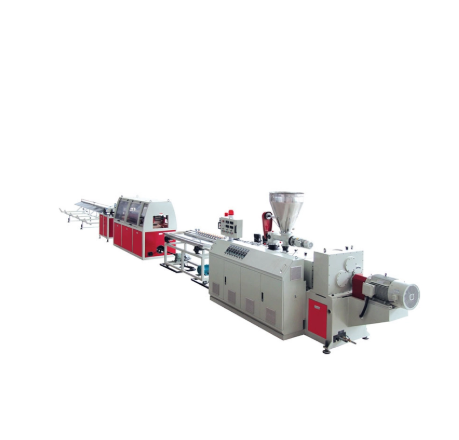
Supplier experience is an important factor when purchasing industrial equipment. A capable manufacturer should understand both machine design and actual production challenges.
Buyers should review:
Extrusion equipment experience
Previous production projects
Engineering capability
Manufacturing facilities
Quality control process
An experienced supplier can provide more practical recommendations based on production goals.
For example, suppliers with experience in high-output PVC sheet lines can better understand requirements related to continuous production, cooling systems, and equipment matching.
Technical knowledge helps reduce risks during installation and operation.
Different factories have different production requirements. A standard machine configuration may not fit every project.
Buyers should check whether suppliers can customize:
Production capacity
Machine layout
Sheet specifications
Automation level
Auxiliary equipment
Customization allows manufacturers to build a production system based on their actual workflow.
Technical support is also important before and after delivery.
Reliable suppliers should provide:
Equipment guidance
Installation support
Operator training
Troubleshooting assistance
Good communication during the purchasing stage helps prevent misunderstandings.
A production line is a long-term investment. Buyers should evaluate supplier reliability beyond the initial quotation.
Important factors include:
Equipment durability
Spare parts availability
Maintenance support
After-sales service
A reliable supplier helps manufacturers maintain stable production over time.
This is especially important for high-capacity production lines because unexpected downtime can affect delivery schedules and customer relationships.
Tip:When comparing PVC sheet production line suppliers, buyers should evaluate equipment performance and service capability together. A complete solution reduces long-term operating risks.
A 300 kg/h PVC sheet production line is suitable for manufacturers that need flexible production and controlled investment.
It is a practical choice when:
Market demand is still developing
Production volume is moderate
Product types change frequently
Investment budget is limited
This capacity allows companies to enter the PVC sheet market with lower financial pressure.
It also provides easier production management for smaller teams.
For businesses focusing on customized orders, a moderate-capacity line can offer better flexibility.
A 700 kg/h PVC sheet production line is designed for manufacturers with larger production goals.
It is suitable for:
Stable large orders
Export production
Industrial customers
Continuous manufacturing
Higher capacity helps companies improve production efficiency and handle larger market demand.
However, buyers should confirm that they have enough orders, factory space, and operational capability before choosing a high-output system.
The final decision should consider more than production speed.
Buyers should evaluate:
| Evaluation Factor | Why It Matters |
|---|---|
| Current demand | Determines required output |
| Future growth | Supports expansion planning |
| Investment budget | Controls financial risk |
| Operating cost | Affects long-term profit |
| Factory condition | Ensures smooth installation |
A suitable production line should match both present requirements and future development plans.
The goal is not simply choosing the highest output. It is selecting equipment that creates the best production value.
Selecting the right PVC sheet production line requires evaluating output capacity, product requirements, operating costs, and future growth plans.
KS Bonzer provides customized PVC sheet production solutions with suitable configurations, reliable performance, and technical support. Its equipment helps manufacturers achieve stable production, improved efficiency, and long-term value.
A: A PVC sheet production line is equipment used to extrude, form, cool, and cut PVC sheets for different applications.
A: Choose based on production demand, order volume, factory capacity, and future expansion plans.
A: A 700 kg/h line offers higher output, while a 300 kg/h line provides more flexibility and lower investment.
A: Capacity depends on extruder configuration, material type, sheet size, production speed, and auxiliary equipment.
A: The cost varies by output capacity, machine configuration, automation level, and customized production requirements.


