
English ![]()

Views: 0 Author: Site Editor Publish Time: 2026-10-16 Origin: Site
Do you struggle with unstable output on your PVC pipe extrusion machine? Many pipe makers face quality defects and low real production yields. In this article, you will learn key factors affecting machine performance and pick up practical ways to stabilize your pipe manufacturing.
Single-screw extruders fit flexible PVC and simple low-demand jobs. Twin-screw extruders are the standard choice for rigid UPVC pipe making. They create gentler shear heat and mix PVC blends more evenly. This design reduces material degradation and supports higher stable output.
For most water supply and electrical conduit pipes, twin-screw units perform better. The extruder type sets the upper limit of your production output, so it needs careful selection in the early project stage.
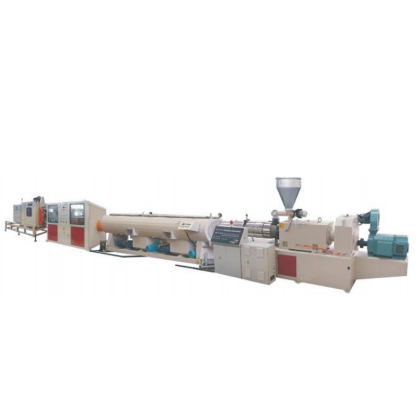
Screw geometry controls mixing strength and material moving speed. Worn screws or barrels create unstable melt flow and lower real output. The rated capacity only shows theoretical maximum speed under ideal conditions. Old or damaged internal parts cut usable production volume sharply.
You can view well-engineered options on this PVC pipe extrusion machine product page. Regular inspection helps you catch abrasion early before it triggers consistent quality defects.
Modern PLC systems track and adjust machine data in real time. Low-quality controllers cause sudden temperature or speed shifts. Small fluctuations lead to dimensional errors and frequent scrap pipes.
High-precision controllers keep every production run consistent shift after shift. Even small upgrades to control hardware can reduce scrap rates and stabilize long-term throughput.
Tip:Check screw and barrel wear every three months for continuous PVC pipe extrusion.
PVC resin molecular weight defines pipe mechanical strength. Heat stabilizers stop PVC from breaking down under extrusion heat. Lubricants control melt flow to avoid over-shear and surface defects.
Wrong additive mixes cause yellowing, brittleness or rough pipe surfaces. Manufacturers should test each new material batch before full-scale pipe extrusion.
Raw PVC powder easily absorbs moisture in humid factory storage. Water turns to vapor inside the hot extruder and creates bubbles inside pipes. Dirt or metal impurities scratch die surfaces and weaken finished pipes.
Proper warehouse storage and material screening reduce these risks. Even small moisture content can ruin a whole batch of finished PVC pipes.
Calcium carbonate filler lowers raw material cost for PVC pipe. Higher filler content increases material stiffness but reduces melt flow. You must reduce extrusion speed when filler loading rises.
Too much filler may make pipes crack under pressure tests. Every formula change requires parameter adjustment to balance cost, output and pipe performance.
Tip:Dry all PVC blends before feeding into the PVC pipe extrusion machine to avoid internal bubbles.
PVC is heat-sensitive and degrades quickly at overly high temperatures. Too low temperature leaves incomplete melting and poor surface finish. Too high heat breaks down PVC resin and releases corrosive gas. Each barrel zone needs independent and precise temperature control.
Higher screw speed may lift output, but it adds shear heat to PVC melt. Melt pressure must stay steady to keep uniform pipe wall thickness. Operators should balance speed and pressure instead of chasing maximum RPM blindly.
The vent section removes trapped air and volatile gas from molten PVC. Poor venting leaves small voids inside the pipe wall. These hidden voids reduce pipe pressure resistance and shorten service life.
Operators need to keep vent ports clean and check vacuum vent status regularly. Blocked vents are a common hidden cause of defective PVC pipes.
Hot molten pipe keeps soft shape right after exiting the extrusion die. Vacuum calibration pulls pipe walls to the correct round shape. Unstable vacuum creates oval pipes that fail installation and inspection. Fast, balanced cooling locks pipe dimensions and reduces internal stress.
The haul-off unit pulls the pipe at a matched speed with extruder melt flow. Faster haul-off stretches the pipe and thins its wall. Slower haul-off causes thick walls and excess material buildup at the die. Synchronization between extruder and haul-off directly decides pipe dimensional accuracy.
Misaligned cutters produce uneven pipe lengths and rough cut ends. Accurate cutting lowers secondary trimming work and reduces material waste.
Full line alignment keeps the pipe moving straight through all downstream stations. Minor misalignment will gradually scratch pipe surfaces and increase scrap volume over time.
Tip:Keep haul-off speed synchronized with extruder speed for stable PVC pipe dimensions.
PVC blend with filler slowly abrades screw and barrel metal surfaces. Chrome-plated dies resist abrasion and keep smooth pipe surface quality. Minor wear can be repaired before it creates constant quality problems.
Vacuum pumps and cooling water circuits need routine cleaning. Blocked filters drop vacuum strength and reduce cooling efficiency. Inverter and motor lubrication prevent sudden shutdowns during continuous runs.
A high-quality PVC pipe extrusion machine still relies on skilled operators. Great operators know how temperature links to screw speed and melt pressure. They avoid changing one setting without checking linked process values.
Written SOPs store proven parameter sets for each pipe specification. Different shifts can repeat stable results using the same recipe. SOPs reduce human error and cut the time needed for product changeover.
Operators should measure pipe diameter and wall thickness every 10 to 20 minutes. Early detection stops hundreds of defective pipes from being made. Ultrasonic thickness sensors support automatic real-time monitoring.
Timely data recording helps teams trace root causes once quality problems happen. It builds a reference database for future formula or product switching.
Thick-wall large-diameter pipes need longer cooling time. They cannot run at the same high speed as thin small conduit pipes. Nominal machine output only applies for specific pipe sizes and formulas.
Custom dies and downstream tools support multi-layer PVC pipe production. A powerful extruder cannot reach full speed with undersized cooling tanks. All line parts must match to unlock the machine’s full capacity. More machine knowledge and case studies are available on BONZER MACHINE.
Tip:Work with your machinery supplier to match all downstream units to your target pipe specs.
Worn screw and barrel, poor feeding, or high filler loading often lower output. Restricted venting or clogged die passages also slow material flow.
Check raw material consistency first before adjusting machine parameters. Many operators adjust machine settings blindly while the real issue comes from raw materials.
Uneven wall thickness usually comes from unstable haul-off or worn die. Oval pipes link directly to weak vacuum or unbalanced cooling. Scratches on pipe surfaces come from damaged die edges or dirty calibration sleeves.
Small defects can quickly expand into large scrap batches without regular inspection. Early identification saves both raw materials and production time.
Operators should track melt pressure, barrel temperature, vacuum level and haul-off speed during each run. They should record wall thickness and pipe roundness for every batch.
Manufacturers should raise extrusion speed only after stable quality holds for a full test run. Systematic checks help teams find problems early and avoid large batches of scrap products.
| Defect | Likely Cause | Recommended Action |
|---|---|---|
| Pipe bubbles | Raw material moisture / poor venting | Dry blends; inspect vent blockage |
| Oval pipe shape | Unstable vacuum tank | Calibrate vacuum pressure |
| Uneven wall thickness | Haul-off speed mismatch | Sync haul-off with extruder |
| Yellow pipe surface | Overheating PVC melt | Lower barrel temperature |
BONZER MACHINE’s PVC pipe extrusion machine balances stable output and consistent pipe quality. This article covers hardware, materials and operational tips. Custom equipment and full technical support help manufacturers reduce scrap and boost production efficiency.
A: Hardware, formulation, temperature, cooling and haul-off coordination determine usable output.
A: Keep PVC pipe extrusion machine settings stable and monitor dimensions.
A: Moisture or poor venting can cause PVC pipe extrusion machine bubbles.
A: Twin-screw extrusion generally provides more consistent mixing.
A: Reduce scrap, maintain equipment and match downstream capacity.


