
English ![]()

Views: 0 Author: Site Editor Publish Time: 2026-09-28 Origin: Site
Building a PVC door panel factory requires more than buying machines.
Have you planned every part of the production line?
A complete PVC door panel production line needs proper equipment matching.
This article explains the key machines, configurations, and planning factors.
You will learn how to build an efficient production system.
A PVC door panel production line is a complete manufacturing system designed to convert PVC raw materials into finished door panels through continuous extrusion processing.
The production process usually starts with raw material preparation. PVC resin, stabilizers, fillers, pigments, and other additives are mixed according to the required formula. The prepared material then enters the extrusion system for plasticizing and forming.
The main production steps include:
| Production Stage | Main Function |
|---|---|
| Material mixing | Creates a stable PVC compound |
| Feeding | Transfers materials into the extruder |
| Extrusion | Melts and forms the PVC material |
| Calibration and cooling | Controls size and shape accuracy |
| Cutting | Creates required panel lengths |
| Packaging | Prepares finished products |
Each stage affects the final door panel quality. Stable material mixing improves processing consistency. Accurate extrusion controls panel thickness and surface appearance. Proper cooling helps maintain dimensional stability after forming.
For manufacturers, the production line is not only a group of separate machines. Each section must work together to achieve efficient production.
PVC door panels are widely used in interior decoration, residential buildings, commercial spaces, and moisture-resistant environments.
Common applications include:
Interior doors
Decorative wall doors
Bathroom doors
Kitchen cabinet panels
Building decoration materials
Different applications require different product characteristics. For example, bathroom applications usually require better moisture resistance. Decorative panels may focus more on surface texture and appearance.
These requirements directly influence equipment selection. A factory producing high-end decorative panels may need additional surface treatment equipment. A manufacturer focusing on standard panels may prioritize stable output and production efficiency.
Every PVC door panel project has different requirements. A machine configuration suitable for one factory may not meet another factory’s goals.
Important planning factors include:
Panel width and thickness
Product structure
Production capacity
Surface design
Target market
For example, a factory producing large decorative panels may require stronger extrusion capacity and advanced finishing equipment. A smaller manufacturer may choose a more flexible production solution.
Before selecting equipment, investors should clearly define their products and production goals. This helps suppliers recommend suitable solutions and prevents unnecessary equipment upgrades later.
提示:Factory investors should confirm their target PVC door panel types first because product design directly affects extrusion configuration, tooling, and auxiliary equipment requirements.
The material preparation system is the first important section of a PVC door panel factory. It ensures that raw materials are evenly mixed before entering the extrusion process.
A typical preparation system may include:
PVC mixer
Hot and cold mixing units
Material storage equipment
Automatic feeding system
Stable mixing improves material consistency and reduces production problems. If additives are not evenly distributed, manufacturers may experience color differences, unstable processing, or uneven panel quality.
Automatic feeding systems also improve production efficiency. They reduce manual handling and help maintain continuous operation.
A complete PVC door panel manufacturing project should consider material preparation equipment as an important part of the production line, not as an optional accessory.
The extruder is the core equipment of the entire production line. It is responsible for melting, plasticizing, and continuously pushing PVC material through the extrusion die.
Common configurations include conical twin screw extruders because they provide suitable processing performance for PVC materials.
Important specifications include:
Screw diameter
Motor power
Heating zones
Temperature control system
Output capacity
A stable extrusion system helps maintain:
Uniform material flow
Accurate panel thickness
Consistent production speed
Better surface quality
The extrusion system should match the product requirements. Higher output demands usually require larger extrusion capacity and stronger supporting systems.
For more information about extrusion solutions, manufacturers can review KS Bonzer’s equipment range:
https://www.ks-bonzer.com/products.html
The extrusion die determines the final shape and structure of PVC door panels.
A suitable die design should match:
Panel dimensions
Internal structure
Surface requirements
Material characteristics
The die controls how PVC material flows during extrusion. Poor matching may cause uneven thickness, unstable forming, or increased material waste.
High-quality forming tools improve product consistency and reduce adjustment time during production.
For factories producing different panel designs, flexible tooling solutions can provide more product development opportunities.
After extrusion forming, PVC panels enter the calibration and cooling section.
This stage controls:
Panel flatness
Dimensional accuracy
Surface appearance
Structural stability
Vacuum calibration equipment helps maintain the designed shape. Cooling systems gradually reduce material temperature and stabilize the final profile.
A well-designed cooling process prevents deformation and improves product reliability.
For PVC door panel manufacturers, accurate calibration is especially important because customers often require consistent dimensions during installation.
The downstream section completes the final production process.
It usually includes:
Haul-off unit
Cutting machine
Automatic stacking system
The haul-off system controls product movement speed. The cutting machine ensures accurate panel length. The stacking system improves handling efficiency.
Automation in this section reduces manual work and improves production consistency.
A complete production line should ensure that extrusion speed, cooling capacity, cutting accuracy, and material handling operate together.
PVC door panels often require additional processing to improve appearance and market value. Surface treatment equipment allows manufacturers to create different decorative effects and expand product applications.
Common surface treatment options include:
Lamination
Printing
Embossing
UV coating
Lamination can add decorative films and improve surface protection. Embossing creates realistic textures for wood grain or other designs. UV coating helps improve surface durability and visual quality.
For factories targeting premium markets, surface treatment equipment can increase product differentiation and provide more customized solutions.
The selection of finishing equipment depends on the target products. Standard PVC door panels may require basic surface processing, while decorative panels may need multiple finishing processes.
Material handling systems improve production continuity and reduce manual operation during manufacturing.
Automatic feeding equipment helps:
Maintain stable material supply
Reduce labor requirements
Improve production efficiency
Lower handling errors
For large-scale PVC door panel factories, automated material transportation can support continuous operation and improve overall workflow.
A well-planned feeding system also helps connect different production sections, creating a smoother manufacturing process.
The final production stage directly affects product delivery quality. Packaging and inspection equipment helps manufacturers control finished product standards.
Important functions include:
Product size inspection
Surface quality checking
Length measurement
Automatic packaging
Quality inspection helps identify defects before products reach customers. It reduces complaints and improves production reliability.
For export-oriented factories, proper packaging systems are also important because PVC door panels may require long-distance transportation.
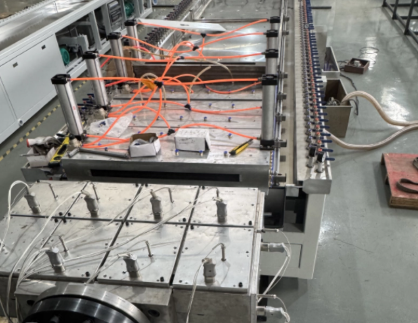
Production capacity is one of the most important factors when selecting a PVC door panel production line.
Different factories may have different production targets:
| Factory Type | Suitable Capacity Planning |
|---|---|
| Small factory | Flexible production for regional markets |
| Medium manufacturer | Stable output for regular orders |
| Large factory | High-volume continuous production |
A higher output line can improve order handling capability. However, it also requires higher investment, larger factory space, and stronger supporting facilities.
Buyers should evaluate current market demand and future growth plans before selecting equipment capacity.
Choosing equipment that matches actual production needs helps control investment risks and improves equipment utilization.
Product design directly affects machine configuration.
Before ordering, buyers should provide detailed product information, including:
Panel width
Panel thickness
Panel length
Hollow or solid structure
Surface pattern
Material formula
Different specifications require different extrusion parameters and tooling designs.
For example, thicker door panels may require stronger extrusion capacity. Decorative panels may need additional surface processing equipment.
Clear product requirements allow suppliers to recommend a more suitable production solution.
Factory conditions should be considered before equipment installation.
Important preparation factors include:
Production area
Power supply
Cooling water system
Raw material storage
Finished product storage
A complete PVC door panel production line requires enough installation space for each section, including extrusion, cooling, cutting, and stacking areas.
Proper factory planning reduces installation delays and improves future production efficiency.
The extrusion system determines the stability and quality of PVC door panel production.
Important technical factors include:
Extruder capacity
Screw design
Motor efficiency
Temperature control
Material processing stability
A reliable extrusion system maintains consistent material flow and reduces production fluctuations.
Stable extrusion performance also helps manufacturers achieve better surface quality and accurate panel dimensions.
Modern PVC door panel production lines often use advanced control systems to improve operation efficiency.
Common automation features include:
PLC control
Digital temperature monitoring
Automatic adjustment
Production data tracking
Automation reduces manual adjustment and helps operators manage production more easily.
For factories with higher output requirements, automation can improve consistency and reduce labor pressure.
Safety and maintenance features influence long-term operation reliability.
Buyers should check:
Overload protection
Emergency stop system
Maintenance accessibility
Spare parts availability
A well-designed machine structure makes daily maintenance easier and reduces downtime.
Before purchasing, buyers should understand the supplier’s maintenance support and technical service capability.
注释:Equipment performance depends not only on machine quality but also on installation, operation, and regular maintenance.
Choosing the right supplier is an important step when building a PVC door panel factory. Equipment quality depends not only on machine design but also on the supplier’s engineering capability and project experience.
Buyers should evaluate:
PVC extrusion experience
Previous production projects
Manufacturing capability
Technical engineering team
Quality control process
Experienced suppliers usually understand the relationship between material characteristics, extrusion parameters, and final product requirements.
They can provide more suitable recommendations based on production goals, product specifications, and factory conditions.
A supplier with strong technical experience can help reduce configuration mistakes and improve equipment commissioning efficiency.
Different factories may produce different PVC door panel products. A standard machine configuration may not meet every manufacturer’s needs.
Customization options may include:
Production capacity adjustment
Machine layout design
Product size requirements
Automation level
Surface treatment options
For example, a factory producing decorative PVC door panels may require additional finishing equipment. A manufacturer focusing on high-volume production may need a stronger extrusion system.
A flexible supplier can adjust the production solution according to specific project requirements.
This helps manufacturers build equipment that matches their market strategy instead of purchasing unnecessary functions.
After-sales support directly affects long-term production stability.
Important supplier services include:
Installation guidance
Operator training
Technical troubleshooting
Spare parts supply
Maintenance support
A complete service system helps manufacturers solve operation problems faster.
Especially for first-time investors, professional technical support can reduce the learning period and improve production efficiency.
注释:A complete supplier evaluation should include equipment quality and service capability because successful production depends on installation and operation support.
Building a PVC door panel factory requires careful budget planning. The total investment depends on more than the extrusion machine itself.
Main cost factors include:
| Cost Factor | Influence |
|---|---|
| Production capacity | Determines machine size and output ability |
| Extrusion configuration | Affects performance and processing efficiency |
| Automation level | Influences labor requirements |
| Surface treatment equipment | Expands product design options |
| Auxiliary equipment | Completes the production process |
A complete production line may include mixing systems, extruders, dies, calibration units, cooling systems, cutting equipment, and packaging solutions.
Buyers should evaluate the entire production system instead of comparing only the initial equipment price.
The lowest quotation does not always provide the best long-term value.
Manufacturers should consider:
Energy consumption
Maintenance requirements
Production stability
Equipment lifespan
Spare parts costs
A machine with better efficiency may require a higher initial investment but provide better operating results over time.
For example, stable extrusion performance can reduce material waste and improve product consistency.
Long-term production value is often more important than short-term purchase savings.
A PVC door panel factory should consider future development before selecting equipment.
Future requirements may include:
Additional product types
Higher production capacity
New surface designs
Automation upgrades
A flexible production line allows manufacturers to expand their business without replacing the complete system.
Planning for future needs helps protect the equipment investment and supports long-term growth.
A successful PVC door panel factory starts with a clear production plan.
Before purchasing equipment, investors should define:
Target products
Expected output
Market demand
Production process
Factory conditions
This information helps determine the correct equipment combination.
A complete plan should include both the main extrusion unit and supporting systems.
For example, a factory producing decorative PVC panels may need additional surface treatment equipment, while a standard panel factory may focus more on stable extrusion capacity.
The best PVC door panel production line depends on the manufacturer’s business goals.
Buyers should consider:
Current production requirements
Future expansion plans
Product quality expectations
Market positioning
A suitable production line should provide stable operation today and enough flexibility for future development.
Choosing equipment based only on current needs may limit future opportunities.
Long-term cooperation with suppliers can improve production performance.
Good supplier relationships include:
Clear technical communication
Professional installation support
Continuous service
Equipment improvement suggestions
A reliable supplier does not only provide machines. It helps manufacturers create a complete production solution.
For PVC door panel factories, cooperation throughout the equipment lifecycle can improve efficiency and reduce production risks.
A complete PVC door panel factory requires proper equipment planning, including extrusion, cooling, cutting, and surface treatment systems. KS Bonzer provides reliable PVC door panel production line solutions with flexible configurations, stable performance, and technical support to help manufacturers improve production efficiency.
A: A PVC door panel production line usually includes mixers, extruders, dies, cooling systems, cutting units, and surface treatment equipment.
A: It improves efficiency through stable extrusion, automated handling, accurate cutting, and consistent product quality.
A: A complete PVC door panel production line reduces configuration problems and supports long-term production stability.
A: The cost depends on capacity, automation level, equipment configuration, and surface processing requirements.


