
English ![]()

Views: 0 Author: Site Editor Publish Time: 2026-10-15 Origin: Site
A window frame looks simple until its dimensions start changing during production. Small differences in wall thickness, profile width, or surface finish can create serious assembly problems. They may cause poor fitting, additional trimming, rejected materials, and delayed deliveries.
For door and window manufacturers, consistent quality matters just as much as production speed. Each finished profile must maintain its intended shape, dimensions, and surface appearance throughout continuous manufacturing.
A reliable PVC Profile Extrusion Line helps manufacturers address these challenges. It combines controlled plasticization, precision dies, vacuum calibration, cooling, and synchronized downstream equipment. These processes work together to produce uniform PVC profiles across extended production runs.
The real advantage is not simply producing more profiles. It is producing profiles that meet the same quality requirements repeatedly, while reducing waste and unnecessary adjustments.
A consistent finished profile starts with a stable extrusion process. Every production stage influences the next. Even a small fluctuation can affect the final dimensions or appearance.
Inconsistent material feeding creates fluctuations inside the extruder. These changes can affect melt pressure, plasticization, and material distribution.
Automated feeding systems help maintain a steady supply of PVC compounds. Consistent formulations also support more predictable processing conditions.
When material enters the extruder uniformly, operators can maintain more stable output. This provides a reliable starting point for downstream shaping and calibration.
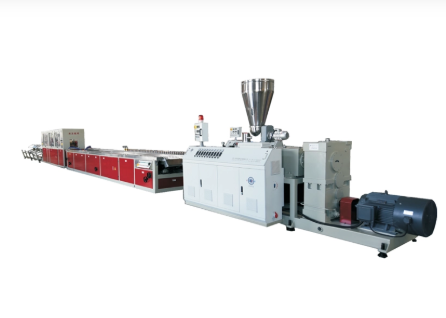
Rigid PVC requires careful temperature management during processing. Excessive heat can damage the compound, while insufficient plasticization may reduce product quality.
Twin-screw extrusion supports controlled mixing and plasticization of PVC formulations. Stable screw operation helps maintain consistent material flow.
For example, the PVC Window Profile Extrusion Line from BONZER uses a twin-screw extrusion system and controlled heating zones. These features support stable PVC processing and continuous profile manufacturing.
However, suitable temperatures depend on the actual formulation and processing conditions.
The extrusion die determines the initial shape of a PVC profile. Its design directly influences wall thickness, internal chambers, and external dimensions.
Poor melt distribution can produce uneven sections or inconsistent walls. These problems become more noticeable in complex window profiles.
Precision tooling helps distribute molten PVC across the intended cross-section. Correct die adjustment also reduces unwanted variations before the profile enters calibration.
Freshly extruded PVC remains soft and requires dimensional support. Vacuum calibration helps maintain its intended cross-sectional geometry during initial cooling.
The calibration tooling guides the profile and controls its external dimensions. Proper vacuum conditions help stabilize corners, surfaces, and critical profile features.
For multi-chamber window sections, tooling accuracy is especially important. Internal ribs and external surfaces must remain properly aligned.
Cooling determines how the extruded profile solidifies. Uneven cooling can introduce internal stresses and dimensional changes.
Water cooling systems help remove heat under controlled conditions. The cooling arrangement must suit the profile geometry and extrusion speed.
Thicker sections may require different cooling conditions than thinner sections. Balanced cooling helps maintain straightness and reduces unexpected deformation.
The haul-off unit pulls the profile through downstream equipment. Its speed must remain coordinated with extrusion output.
Excessive pulling can stretch the profile before sufficient cooling occurs. Insufficient pulling may contribute to dimensional instability or inconsistent material distribution.
Stable traction helps preserve the intended profile dimensions. It also supports predictable movement through calibration and cooling equipment.
Cutting accuracy matters during door and window fabrication. Inconsistent profile lengths create additional adjustment work during assembly.
Automatic cutting equipment operates according to programmed length requirements. Coordinated controls help synchronize cutting movements with line speed.
Together, these systems support repeatable output from extrusion through final cutting.
Tip: Evaluate profile dimensions after cooling, not immediately after the extrusion die.
Window and door profiles must fit other components during fabrication. Their dimensions influence welding, reinforcement installation, sealing, and hardware assembly.
Many PVC window profiles contain multiple internal chambers. Their design supports structural performance and other system requirements.
Uneven wall thickness can affect profile rigidity and material distribution. Incorrect chamber dimensions may also interfere with reinforcement installation.
Stable extrusion conditions help maintain the intended geometry. Manufacturers should inspect critical dimensions against approved product drawings.
Dimensional errors often become visible during downstream fabrication. A slightly distorted profile may require additional adjustment before welding.
Poor fit can also create difficulties during hardware installation. Repeated corrections increase labor requirements and slow production.
Consistent profiles move through fabrication with fewer unexpected adjustments. They support repeatable cutting, joining, and assembly operations.
Profile distortion may appear as bending, twisting, or uneven shrinkage. These defects can develop during cooling or subsequent handling.
Proper calibration supports the profile while it remains warm. Controlled cooling then helps stabilize its final shape.
Operators should also inspect haul-off alignment and collection conditions. Excessive mechanical pressure can damage otherwise acceptable profiles.
Note: Dimensional requirements vary by profile design, application, and applicable product standards.
Surface quality is highly visible in finished window and door systems. Discoloration, roughness, or uneven finishes can reduce product acceptance.
Temperature instability can create several processing problems. Excessive heat may cause PVC degradation or discoloration. Inadequate plasticization can contribute to rough surfaces and inconsistent material behavior.
Operators should monitor heating zones and actual processing conditions. Stable settings help maintain a consistent melt condition.
Temperature adjustments should consider screw speed, formulation, and material residence time.
A well-shaped profile may still deform during cooling. Uneven heat removal can produce different shrinkage rates across its cross-section.
Balanced cooling helps preserve profile straightness and surface geometry. Calibration tooling and cooling water conditions must work together.
For complex profiles, cooling adjustments should follow actual dimensional measurements. Increasing cooling intensity alone may not solve the problem.
Customers expect profiles from different production batches to look similar. Visible differences may create problems during fabrication and installation.
Consistent raw materials, temperature settings, and tooling conditions improve repeatability. Clean calibration surfaces also help prevent unwanted marks.
When a finish changes unexpectedly, operators should review recent process adjustments. They should also examine material batches and tooling condition.
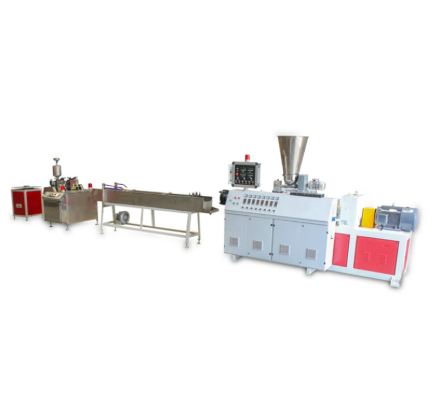
Production defects affect more than material costs. They also consume machine time, labor, electricity, and cooling resources.
A stable PVC Profile Production Line helps manufacturers control these losses through coordinated extrusion and downstream processing.
Common rejection causes include incorrect dimensions, deformation, discoloration, and damaged surfaces.
These defects may result from unstable temperatures, poor calibration, or inconsistent traction. Identifying their actual causes prevents repeated unsuccessful adjustments.
Stable processing conditions reduce the likelihood of producing unacceptable profiles.
Frequent manual adjustments can introduce additional variation. Operators may correct one problem while creating another.
Documented operating settings provide a more reliable starting point. They help teams reproduce previously successful production conditions.
When problems occur, operators can compare current readings against approved settings. This makes troubleshooting more systematic.
Material savings should not come from reducing necessary wall thickness. Finished profiles must still meet their design requirements.
Instead, manufacturers should focus on reducing rejected output and unnecessary startup losses.
Stable extrusion also helps prevent excessive material variation between production runs. Over time, fewer defective profiles can improve usable production yield.
Production problem | Process control | Expected benefit |
|---|---|---|
Uneven wall thickness | Stable extrusion and haul-off | More uniform profile geometry |
Warping or twisting | Balanced calibration and cooling | Improved dimensional stability |
Rough or discolored surfaces | Controlled plasticization and temperature | More consistent appearance |
Incorrect profile lengths | Synchronized automatic cutting | Less cutting-related rework |
High rejection rates | Standardized process settings | Reduced material waste |
Tip: Track rejected profile weight and defect categories separately. This helps identify which production stages need attention.
Automation helps operators maintain repeatable production conditions. It also reduces dependence on frequent manual adjustments.
However, automated systems still require correct setup and ongoing inspection.
Modern extrusion systems can provide centralized process monitoring. Operators can review temperature zones, screw speed, and other available operating readings.
Monitoring helps reveal unexpected process changes. It also supports faster responses before defects spread across production batches.
Available sensors and monitoring functions depend on the equipment configuration.
Extrusion is a connected manufacturing process. Changes in one stage can influence downstream results.
Coordinated control helps maintain suitable relationships between machine output and haul-off speed. Automatic cutting then follows the established production sequence.
This reduces unnecessary interruptions and supports predictable product handling.
Experienced operators often develop effective settings through production trials. Recording these settings makes their knowledge easier to reproduce.
Recipe management can preserve relevant temperatures, speeds, and operating parameters. Teams can then use approved settings during repeated production runs.
They must still confirm performance when materials, tooling, or environmental conditions change.
Note: Automation improves control, but it cannot compensate for unsuitable dies or incorrect PVC formulations.
Even well-designed equipment needs appropriate operating conditions. Manufacturers should optimize the complete process rather than individual components alone.
Different profiles require different processing conditions. A thick door frame may behave differently from a narrow glazing bead.
Material formulation also influences plasticization and cooling behavior. Filler levels, stabilizers, and processing modifiers can change production requirements.
Manufacturers should establish suitable operating settings through controlled trials. Successful settings should be recorded for future production.
Dimensional drift can have several possible causes. Operators should avoid adjusting multiple parameters without identifying the problem.
First, compare the finished profile against approved dimensions. Then examine extrusion stability, calibration conditions, and traction speed.
Make controlled adjustments and measure the results. This approach helps identify which changes actually improve consistency.
Quality inspections should cover profile dimensions, wall thickness, straightness, surface appearance, and cutting length.
Maintenance should focus on components affecting production stability. These include screws, barrels, dies, calibration tooling, cooling systems, and haul-off equipment.
A practical inspection routine might include:
Checking critical dimensions at scheduled intervals.
Recording temperature and production speed changes.
Inspecting calibration surfaces and cooling performance.
Checking haul-off belts for wear and uneven pressure.
Recording recurring defects and corrective actions.
Tip: Measure several profiles during each inspection. A single acceptable sample cannot establish consistent production.
Choosing an extrusion line involves more than comparing machine prices or maximum output.
The equipment must match the intended profile geometry, formulation, production volume, and quality requirements.
Higher production capacity is not always the better choice. Output must remain compatible with calibration and cooling capabilities.
For example, BONZER lists its SJZ 65/132 window profile extrusion equipment for UPVC window manufacturing. Its product information describes twin-screw extrusion, vacuum calibration, water cooling, and synchronized downstream processing.
Manufacturers should evaluate the required output using their actual profile drawings and PVC formulations. Production trials provide more useful evidence than nominal machine capacity alone.
Tooling determines whether the line can produce the required profile geometry.
Manufacturers should provide detailed drawings and dimensional requirements before equipment selection. Complex multi-chamber profiles may need specialized calibration arrangements.
Tooling accessibility also matters during maintenance and product changeovers. Properly maintained dies and calibrators support long-term repeatability.
Reliable downstream equipment helps maintain quality after extrusion. Calibration, cooling, haul-off, and cutting must operate as a coordinated system.
Equipment evaluation should include control functions, maintenance accessibility, and technical support.
A supplier should also explain how production settings will be established and verified.
BONZER MACHINE offers PVC extrusion machinery for different profile manufacturing applications. Manufacturers can discuss profile drawings, processing requirements, and equipment configurations before choosing a production line.
Tip: Request a production trial using your intended PVC formulation and profile design whenever practical.
Consistent PVC door and window profiles depend on stable extrusion, precise calibration, and controlled cooling. These processes improve dimensional accuracy, reduce material waste, and maintain reliable product quality.
BONZER MACHINE provides PVC Profile Extrusion Lines featuring twin-screw extrusion, vacuum calibration, and coordinated downstream equipment. These solutions help manufacturers achieve stable production and consistent profile quality.
By combining reliable equipment and suitable process controls, manufacturers can reduce defects, improve efficiency, and maintain consistent production results.
A: A PVC Profile Extrusion Line stabilizes material flow, dimensions, and cooling for uniform quality.
A: It prevents uneven plasticization, discoloration, and surface defects.
A: It maintains accurate dimensions and reduces profile deformation.
A: Yes, a PVC Profile Extrusion Line reduces material waste and rework.
A: Unstable extrusion output, die flow, or haul-off speed causes variations.
A: Uniform cooling minimizes warping, shrinkage, and dimensional changes.


