
English ![]()

Views: 0 Author: Site Editor Publish Time: 2026-09-15 Origin: Site
Global demand for high-performance PVC profiles is scaling at an unprecedented rate. However, selecting the wrong manufacturing equipment inevitably leads to inflated operational costs and crippling downtime. This comprehensive technical guide breaks down exactly how to configure a reliable extrusion system to protect your profit margins.
Match Machine to Output: Selecting the correct extruder capacity prevents energy waste and ensures you meet target production metrics without overstraining the mechanical drive systems.
Understand the Full Line: Continuous manufacturing relies on the exact synchronization of the extruder, cooling units, and traction mechanisms.
Prioritize Energy Efficiency: Implementing modern PLC controls and variable frequency drives significantly reduces long-term operational expenditures.
Evaluate Supplier Support: Machine downtime destroys profitability. Fast spare parts availability, on-site installation assistance, and formulation support remain critical procurement factors.
A specialized industrial extrusion system is designed to melt, shape, and cool polyvinyl chloride resin into continuous linear forms. These profiles serve as foundational components in the construction and interior design sectors. Walk onto any modern construction site, and you will see these materials utilized for window frames, door panels, wall claddings, and heavy-duty cable trunking.
Analyzing current industry trajectories reveals a definitive shift toward sustainable construction protocols and stringent energy-efficiency mandates. Global building codes now demand higher thermal insulation values from window and door profiles. This regulatory shift forces modern extrusion facilities to adapt rapidly. The market is aggressively moving toward smart manufacturing, where equipment must flawlessly process complex Wood-Plastic Composites or high-recycled-content PVC without compromising structural integrity. Furthermore, the rising cost of raw polymers is pushing manufacturers to adopt multi-cavity designs that use less material while maintaining high structural rigidity.
This industry-wide evolution pushes procurement managers to prioritize adaptive screw designs and AI-driven thermal controls over legacy, rigid systems. Upgrading to advanced extrusion technology is no longer an optional luxury; it is a fundamental operational necessity. When an operator attempts to push outdated equipment beyond its limits, the result is often warped profiles, inconsistent wall thicknesses, and bins full of costly scrap. By investing in precise machinery, manufacturers directly lower their cost per meter, drastically reduce material waste, and maintain a competitive edge in a demanding global market.
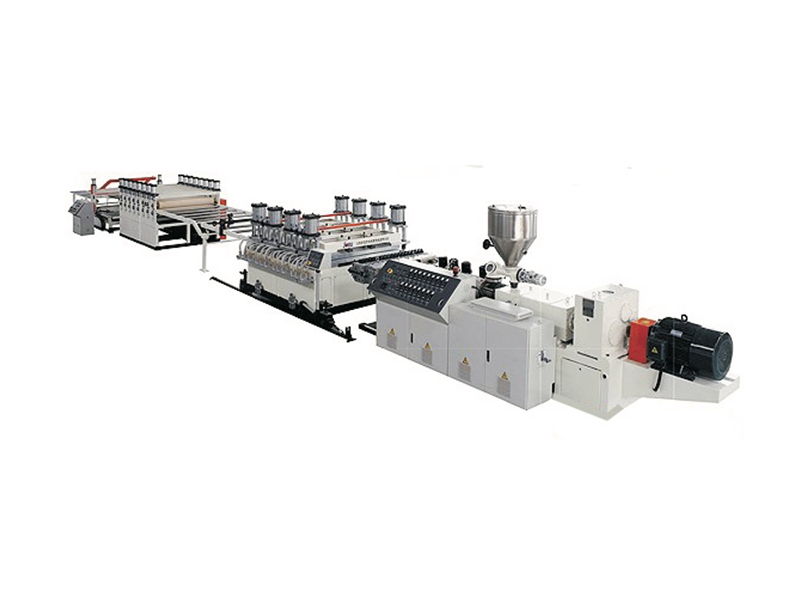
Imagine standing on the factory floor. Dry PVC powder feeds into the stainless steel hopper, and within minutes, perfectly shaped, glossy window frames emerge at the other end. This seamless operation is not achieved by a solitary unit. Instead, it relies on a synchronized series of specialized components. Understanding how these units interact is strictly essential for engineering teams evaluating system specifications.
For processing dry PVC powder blends, the industry standard is the conical twin screw extruder. Unlike single-screw systems, this design features two interlocking screws that taper toward the discharge end. This specific geometry provides distinct advantages for PVC, which is a polymer notoriously sensitive to heat and shear friction. The wider feed section accommodates low-bulk-density powder, while the tapering design gradually increases compression forces. Consequently, this ensures thorough mixing and stable material feeding into the die, all while preventing catastrophic thermal degradation.
Once properly melted and pressurized, the polymer exits through the die head. This custom-machined steel component forces the plastic into the initial shape of the desired architectural profile. Because PVC flow dynamics are highly complex, the internal channels must be engineered to guarantee equal flow velocity across all sections. High-quality moulds, typically manufactured from specialized tool steels like 3Cr17, offer excellent wear resistance against abrasive calcium carbonate fillers. A precisely machined die head serves as the ultimate deciding factor in achieving smooth surface finishes and accurate internal webbing.
Immediately after the molten plastic exits the die, it enters the calibration table. At this critical stage, the profile remains soft and highly prone to warping. This unit utilizes a combination of vacuum sizing blocks and chilled water spray tanks to rapidly freeze the PVC while holding it strictly to its final dimensions. The vacuum pressure pulls the soft plastic against the calibrator walls, locking in the geometry. Without a highly efficient cooling infrastructure, operators will face severe issues with profile shrinkage, bowing, and dimensional instability.
To maintain continuous production, the profile must be pulled through the cooling tanks at a highly precise, unwavering speed. This synchronized pulling action is the primary function of the haul off machine, often referred to as a caterpillar tractor in the industry. It utilizes heavy-duty rubber belts that grip the profile firmly without crushing the internal cavities. If the pulling speed fluctuates even a fraction of a millimeter per second, the profile will stretch, thin out, or jam entirely within the calibration blocks. Following the traction unit, an automated cutting saw slices the continuous profile into predetermined lengths, which are then transferred to a pneumatic stacking table.
When configuring a new production facility, selecting the correct extruder geometry is a foundational engineering decision. While both designs process thermoplastic materials, their mechanical structures dictate entirely different optimal applications.
| Feature | Conical Twin Screw Extruder | Parallel Twin Screw Extruder |
|---|---|---|
| Best Application | Rigid PVC profiles, window frames, WPC panels | High-speed large pipe extrusion, pelletizing |
| Material Feed | Excellent for raw, low-density powder blends | Better suited for pre-compounded pellets |
| Shear & Heat | Low shear at low speeds, prevents PVC burning | High shear, risk of degradation with raw PVC powder |
| Pressure Generation | High natural compression due to tapered design | Relies on screw configuration for pressure |
For complex architectural profile manufacturing, the conical design remains the undisputed standard. It builds the high pressure necessary to push the dense melt through intricate dies without overheating the heat-sensitive polymer.
Procuring an extrusion line requires a thorough, empirical technical evaluation. To ensure a solid return on investment, buyers must rigorously assess specific mechanical and electrical parameters.
The primary specification to determine is your required output, usually measured in kilograms per hour. This metric dictates the physical size of the extruder you must purchase. For instance, a standard SJSZ-65/132 conical twin-screw model typically delivers a reliable output of 250 to 300 kilograms per hour, making it ideal for standard window profiles. Over-sizing the equipment leads to wasted electricity and underutilized capacity. Conversely, under-sizing forces the motor and gearbox to operate at their absolute limits, accelerating mechanical wear and virtually guaranteeing premature thrust bearing failure.
Energy costs constitute a massive portion of operational expenditures. When evaluating machines, look beyond the mechanical steel and inspect the electrical architecture. Extruders equipped with premium ABB or Siemens variable frequency drives consume significantly less power by matching motor output to exact load requirements. Furthermore, upgrading to cast-aluminum barrel heaters with specialized insulating covers traps heat effectively, directly lowering the electricity required during the plasticization phase.
Not all chemical formulations behave identically. Rigid UPVC for window frames demands a different shear rate than Wood-Plastic Composites or mixtures heavily loaded with calcium carbonate filler. Before finalizing a purchase, provide your supplier with your exact material recipe. A reputable manufacturer will customize the bimetallic screw flight depth, pitch, and compression ratio to match the specific rheological properties of your compound.
Modern extrusion relies heavily on automation to eliminate human error. A Siemens programmable logic controller paired with an intuitive touch-screen interface allows operators to monitor critical data points in real-time. This includes melt temperature, back-pressure, screw RPM, and traction speed. Advanced systems store specific product recipes, allowing for rapid parameter setup during product changeovers and drastically reducing start-up scrap.
The physical robustness of the machine dictates its overall lifespan. Examine the gearbox design specifically. It should feature hardened, ground gears with a heavy-duty thrust bearing system capable of handling the extreme back-pressure generated during extrusion. Standardized electrical components ensure that if a contactor or relay fails, your maintenance team can source a replacement locally, minimizing costly production halts.
Procuring the machinery is only one phase of the investment. Successful implementation requires rigorous facility preparation before your PVC profile production can officially commence.
First, verify your industrial utility planning. The factory must possess a robust electrical grid to handle peak loads during machine startup. Equally critical is the cooling infrastructure. Facilities must install properly sized industrial chillers capable of delivering a constant flow of low-temperature water, typically maintained between 15 and 20 degrees Celsius. Fluctuating water temperatures will immediately result in dimensional instability and rejected batches.
Next, establish reliable supply chains for your raw materials. Secure high-quality resin, heat stabilizers, lubricants, impact modifiers, and fillers. Having these materials ready and pre-mixed ensures that trial runs can begin the moment the equipment is wired. Finally, designate operators to undergo technical training. They must understand how to read melt pressure gauges, interpret thermal fluctuations, and tune the caterpillar traction speed to prevent catastrophic equipment damage during the initial learning curve.
Purchasing a heavy-duty PVC extrusion machine is not a one-time transaction. Instead, it marks the beginning of a long-term operational partnership. The initial capital expenditure is significant, but the cost of extended machine downtime due to poor supplier support can rapidly erode your profit margins.
A reliable supplier provides transparent, documented guarantees regarding their after-sales service. Confirm whether they deploy qualified engineers to your facility to assemble the line, connect utilities, and conduct initial test runs. Equipment that is improperly leveled or calibrated during installation will suffer from accelerated wear and tear. In addition, inquire about formulation assistance. Top-tier manufacturers often help clients optimize their chemical mixtures to balance product rigidity, surface gloss, and raw material costs. Lastly, assess their spare parts inventory. Components like barrel heaters and thermocouples are consumables. A supplier that maintains a robust inventory and guarantees fast shipping protects your business from extended periods of unprofitable downtime.
For business owners and financial controllers, evaluating this procurement requires looking far beyond the initial sticker price. The most accurate budgeting metric is the Total Cost of Ownership, which encompasses the purchase price, energy consumption, material waste, maintenance, and labor over the entire lifecycle of the machine.
Opting for the cheapest available equipment frequently results in a much higher Total Cost of Ownership. Substandard metallurgy in the barrel leads to premature degradation, especially when processing highly abrasive formulas. Outdated motor technology consumes drastically more electricity. By combining lower energy bills, reduced material waste through automated synchronization, and minimized downtime, a premium extrusion line facilitates a much faster and more reliable return on investment, securing the long-term profitability of your operation.
Selecting the right manufacturing equipment requires careful, empirical evaluation. You must match the extruder capacity to your specific output goals, ensuring every downstream component works in perfect harmony. By prioritizing energy efficiency, smart automation, and robust supplier support, you safeguard your facility against hidden operational costs.
If you are planning to upgrade your facility or launch a new profile manufacturing project, partnering with an experienced equipment manufacturer is your most critical step. Explore the high-performance extrusion solutions available at ks-bonzer.com to find customized, energy-efficient machinery designed to maximize your production output and secure your competitive advantage in the market.
A standard production line typically requires a straight-line footprint of 15 to 25 meters in length. Additional floor space must be allocated for raw material mixing stations, water cooling infrastructure, forklift pathways, and finished product storage.
With rigorous preventative maintenance, the machine frame and major drive components can operate effectively for over 10 years. However, the bimetallic screws and barrels are wear parts. They generally require refurbishing or replacement every 3 to 5 years, depending largely on the abrasiveness of the calcium carbonate ratio in your formulation.
Yes, modern equipment is highly versatile. By changing the extrusion die head and the corresponding calibrator, and subsequently adjusting the PLC processing parameters, a single machine can manufacture various profiles. This is entirely possible provided the extruder output capacity aligns with the size of the new mould.
The calibration unit utilizes a combination of vacuum pressure and chilled water to freeze the molten polymer into its exact dimensional shape as it exits the die. Without a precisely engineered cooling process, the profiles will suffer from severe thermal shrinkage, warping, and failure to meet strict architectural tolerances.
Routine maintenance involves regularly checking and adjusting the pneumatic tension of the caterpillar belts to ensure consistent pulling force. Operators must keep the rubber traction blocks clean to prevent profile slippage, and periodically lubricate the internal transmission gears to maintain synchronized speed with the extruder.
The ideal temperature depends heavily on your specific formulation, but generally, the barrel zones range from 170 to 195 degrees Celsius. The die head is typically maintained slightly higher, around 195 to 205 degrees Celsius, to ensure a smooth surface finish. Precise temperature control is critical to prevent the PVC from burning and degrading.
Surface defects usually stem from improper melt temperatures, inadequate lubrication in the PVC formulation, or a dirty die head. First, verify that the heater bands and thermocouples are functioning correctly. If temperatures are accurate, check the die for burnt material buildup or adjust the external lubricant ratio in your raw material mix to improve polymer flow.


