
English ![]()

Views: 0 Author: Site Editor Publish Time: 2026-09-16 Origin: Site
Walk onto any modern construction site, and you will witness a massive material shift. Traditional timber rots quickly, splinters underfoot, and demands relentless chemical sealing to survive the elements. In contrast, pure plastic lacks the robust structural integrity and natural aesthetic required for premium architectural projects. This stark market gap is precisely where advanced extrusion technology steps in.
By seamlessly blending organic wood fibers with recycled polymers, manufacturers can create highly durable, weather-resistant composites that easily outperform their raw counterparts. In this comprehensive guide, we will unpack the mechanics of how this machinery operates on the factory floor. You will learn the intricacies of a complete production setup, the shift toward advanced manufacturing techniques, and how to optimize your outdoor profile production for maximum profitability and market reach.
A composite profile extrusion machine functions as a critical industrial system, seamlessly blending organic wood powder with thermoplastic polymers to produce highly durable materials.
Investing in dedicated extrusion equipment offers a measurable return on investment, driven by surging global market demand for sustainable building alternatives.
Modern co-extrusion technology allows manufacturers to create capped composites, offering a structural upgrade with superior UV resistance and zero moisture penetration.
A single extrusion line provides immense manufacturing flexibility. By adapting different molds, facilities can output decking boards, privacy fences, exterior wall cladding, and architectural pergolas.
Evaluating machinery requires a strict assessment of conical twin-screw extruder capacity, electrical motor efficiency, and the availability of reliable after-sales support.
At its core, this equipment serves as an advanced industrial manufacturing system engineered to melt, mix, and shape raw materials into continuous, rigid structures. Unlike standard plastic manufacturing, composite production requires specialized machinery capable of handling the unique thermal and physical properties of organic wood fibers mixed with synthetic polymers. Step onto a composite manufacturing floor, and you will immediately notice the distinct environment. The high-torque hum of heavy gearboxes pairs with the faint, earthy scent of heated pine dust and melting resin.
The primary objective of this machinery is to facilitate high-volume output while maintaining strict dimensional tolerances. The success of the process relies heavily on a precise raw material matrix. A typical formulation balances 55 to 65 percent wood or plant fiber, like sawdust or bamboo flour, with 25 to 35 percent thermoplastic resins like recycled HDPE or PVC. Essential chemical additives, including coupling agents and UV stabilizers, make up the remaining percentage. These additives ensure the hydrophilic wood bonds securely with the hydrophobic plastic molecules.
Furthermore, the manufacturing process itself is a continuous thermodynamic cycle. Pre-mixed materials feed into a heated barrel where rotating screws subject them to intense mechanical shear and thermal energy. Temperatures here typically peak around 190 degrees Celsius. Once a homogenous melt is achieved, high internal pressure forces the composite through a precision-machined steel die. This die dictates the final cross-sectional shape before the profile enters a rapid cooling phase.
A fully functional wood plastic composite line operates not as a single unit, but as a synchronized symphony of specialized equipment. Each component must function in perfect harmony to prevent material degradation and ensure absolute product consistency.
For composite production, a conical twin-screw extruder is the undisputed industry standard. Single-screw extruders simply lack the necessary mixing capabilities for formulations with high wood-fiber content. The conical twin-screw design features two interlocking screws that taper toward the output end. This specific geometry forces the wood powder and plastic to fold into one another repeatedly, ensuring even distribution. As the material moves forward, the tapering design naturally increases pressure and controlled shear. This achieves optimal plasticization without burning the heat-sensitive wood fibers.
The extrusion die is a meticulously engineered component, generally milled from high-grade tool steel to withstand the abrasive nature of flowing biomass. Using advanced fluid dynamics, the internal flow channels are designed to ensure the molten composite travels at a uniform velocity. Whether a factory is producing a complex multi-chambered hollow board or a solid structural post, the die must account for the specific expansion and shrinkage rates of the material as it exits the machine.
Because the composite exits the die in a semi-molten, pliable state, it must be instantly cooled and sized to prevent collapsing. The vacuum calibration table utilizes specialized sizing blocks. As the profile passes through, strong vacuum pumps pull the material against the walls of the calibrator, forcing it to hold its exact shape. Simultaneously, high-volume chilled water jets spray the profile. Precise control here is non-negotiable. Slight variations in water temperature or vacuum pressure can lead to internal stress fractures or bowing in the finished boards.
Following the cooling phase, the haul-off unit utilizes heavy-duty caterpillar tracks to grip the solidified profile, pulling it continuously down the line. This pulling speed must be perfectly synchronized with the extruder output. If the tractor pulls too fast, the profile stretches and thins. If it pulls too slow, molten material backs up at the die. An automated, pneumatic cross-cut saw then slices the continuous profile into precise lengths based on pre-programmed specifications, utilizing integrated dust-extraction systems to manage debris.
Straight out of the cooling tank, the product has a smooth, somewhat plastic-like appearance. To achieve the premium aesthetic required for modern architectural materials, the profiles undergo post-extrusion surface treatments. Sanding machines remove the glossy outer skin to create a matte, slip-resistant finish. Brushing machines use wire rotary brushes to mimic the natural micro-striations of rough-sawn timber. Meanwhile, heated embossing rollers stamp deep, realistic three-dimensional wood grain patterns directly into the surface.
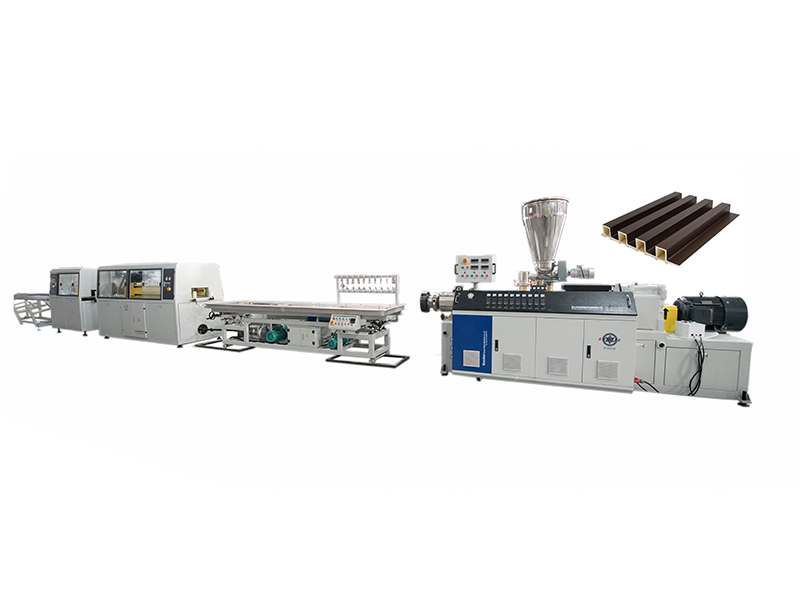
The inherent versatility of the extrusion process allows manufacturers to serve multiple sectors of the construction and landscaping industries. By simply changing the steel dies and adjusting the material formulations, a single factory floor can output a vastly diverse product catalog.
The most ubiquitous application for this machinery is the production of decking boards, which generally fall into two categories: solid and hollow. Solid decking offers maximum load-bearing capacity and impact resistance, heavily utilized in commercial applications and public boardwalks. Hollow decking, featuring internal weight-saving chambers, remains highly popular for residential patios and pool surrounds where extreme structural loads are not a primary concern. This offers a highly cost-effective solution for homeowners.
As property owners actively move away from timber fencing that requires biennial painting and sealing, the demand for a reliable WPC fence profile has surged dramatically. Extrusion lines easily produce the robust posts, horizontal rails, and vertical privacy slats required for complete fencing systems. These composite barriers provide exceptional resistance to gale-force winds, ground moisture, and termite infestations. They maintain their structural integrity and color for decades without harsh chemical treatments.
Exterior composite wall cladding is rapidly becoming a staple in modern architectural design. These specific profiles are extruded with clever interlocking tongue-and-groove systems, allowing for seamless, hidden-fastener installation on building exteriors. Beyond aesthetics, the composite material provides an additional layer of thermal insulation and protects the underlying structural wrap from harsh weather conditions.
Heavy structural profiles are increasingly replacing traditional timber in municipal landscaping projects. Extrusion lines can produce large-dimension beams and columns used to construct pergolas, gazebos, and park seating. To increase span capacity and prevent deflection over long distances, these heavy-duty structural profiles often incorporate internal aluminum inserts during the installation phase.
Recent market intelligence reveals a structural shift in the global building materials sector. Driven by stringent environmental regulations in North America and Europe, builders are aggressively phasing out chemically treated lumber. The current trend heavily favors zero-maintenance alternatives. Specifically, demand is surging for multi-layer composites that offer extreme weatherability without sacrificing the natural timber aesthetic. While standard monolayer products possess excellent durability, the industry is rapidly transitioning toward a more advanced manufacturing standard to meet these exact needs.
Co-extrusion is an intricate manufacturing process that utilizes two separate extruders simultaneously feeding into a single, specialized die. The primary conical twin-screw extruder pushes the core material, making up about 90 percent of the board volume. Simultaneously, a smaller secondary extruder pushes a thin, highly engineered thermoplastic layer that wraps entirely around the core before it exits the die. This creates a capped composite board, merging the cost-effectiveness of a standard core with the extreme resilience of an advanced polymer shell.
Market preference for these upgraded products is driven by empirical performance data. The protective outer shield drops moisture absorption rates to virtually zero, making the boards entirely impermeable. Unlike traditional monolayer boards that might absorb grease from a dropped barbecue burger, capped composites are impervious to common stains. They wipe clean effortlessly. Furthermore, the engineered shell contains advanced UV inhibitors that prevent the gradual lightening associated with early-generation materials, maintaining original color depth for over twenty years.
For factory owners, integrating a co-extrusion machine setup represents a highly strategic business upgrade. Transitioning to this technology allows manufacturers to immediately enter the premium tier of the outdoor building materials market. While the initial capital expenditure for the secondary extruder and specialized co-extrusion dies is higher, capped composites command a significantly higher retail price. This drastically increases profit margins while offering a superior, warranty-backed product to high-end residential contractors.
Understanding the mechanics of extrusion is only half the equation. Evaluating the commercial viability of the end product is equally critical for investors and facility managers. The economic argument for establishing a composite manufacturing facility is grounded in shifting market data, raw material economics, and highly favorable long-term profitability.
The global market is experiencing unprecedented growth, with forecasts indicating a robust compound annual growth rate extending well into the next decade. Analysts note that major markets are demanding sustainable alternatives to deforestation. For facility managers, this trend signals a clear mandate. Transitioning to eco-friendly composite manufacturing is no longer just a green initiative, but a critical competitive necessity to capture large-scale municipal and residential contracts.
One of the most compelling financial advantages of operating this equipment is the underlying cost structure of the raw materials. Unlike industries entirely reliant on virgin petrochemicals, composite manufacturing thrives on recycled inputs. The thermoplastic component is frequently sourced from post-consumer waste, like recycled milk jugs and detergent bottles. The wood fiber is typically a byproduct salvaged from other industries, like sawdust from furniture manufacturing or agricultural rice husks. By utilizing these industrial waste streams, manufacturers dramatically lower their acquisition costs while positioning their end product as a certified green building material.
The transformation of low-cost, recycled raw materials into premium architectural elements yields substantial profit margins. Securing a dedicated WPC decking machine allows investors to capitalize on this exact shift. Once the initial formulation is optimized and the line is calibrated for continuous operation, the per-meter production cost drops significantly. The automated nature of modern lines minimizes manual labor requirements, further padding the bottom line. For well-managed facilities, this results in a rapid return on investment, provided strict quality control measures are maintained to minimize material scrap.
Procuring heavy extrusion equipment is a significant capital expenditure. The mechanical stability of the hardware directly impacts production uptime, product consistency, and overall factory profitability. Decision-makers must evaluate suppliers based on technical specifications rather than just initial purchase price. To make this concrete, let us look at the actual parameters required for different production scales.
The core of any facility is the extruder itself. Buyers must align the machine size with their target output, measured in kilograms per hour. Selecting an undersized machine leads to overworking the motor and premature gearbox wear. Conversely, an oversized machine results in unnecessary energy consumption.
| Extruder Model | Main Motor Power | Max Output Capacity | Best Suited For |
|---|---|---|---|
| SJSZ 65/132 | 37 kW | 150 - 250 kg/h | Standard decking, fence slats, wall cladding |
| SJSZ 80/156 | 75 kW | 350 - 450 kg/h | Wide structural panels, heavy pergola beams, high-volume output |
The longevity of an extrusion line is heavily dependent on its internal electrical components. The high-pressure, high-temperature environment requires robust systems to prevent dangerous fluctuations and costly downtime. When evaluating a supplier, meticulously inspect the bill of materials. Reliable equipment will feature internationally recognized brands. Look for Siemens or WEG main motors for consistent torque, ABB or Yaskawa frequency inverters for precise speed control, and Omron temperature controllers to maintain the exact heat profile required to prevent biomass burning.
The physical steel and wires are only one part of the equation. Composite manufacturing requires highly precise chemical formulations. A difference of just two percent in a lubricant or coupling agent can completely alter the structural integrity of a deck board. Therefore, buyers should seek turnkey solution providers who offer comprehensive factory layout planning, established chemical formula support, on-site installation, and rigorous operator training. Partnering with an expert ensures a swift transition from installation to profitable production.
To protect the capital investment and ensure consistent product quality, facility managers must implement strict, non-negotiable maintenance protocols. The naturally abrasive nature of wood flour and the high temperatures required for plasticization mean that this equipment requires diligent, proactive care from frontline operators.
A proactive schedule minimizes unexpected breakdowns. Daily protocols require operators to verify that all heater bands are functioning correctly before initiating a cold start. Vacuum pump water levels and cooling tank temperatures must be checked routinely. Weekly protocols involve inspecting the caterpillar haul-off rubber pads for wear and cleaning the vacuum calibration molds to remove residue buildup that could scratch the profiles. On a quarterly basis, the screw and barrel must be inspected for wear. As clearance increases over time, shearing force drops, which directly lowers production output.
Even with meticulous maintenance, operators will occasionally encounter manufacturing defects. Recognizing the symptoms allows for rapid adjustments. If a profile emerges with a rough or pitted surface, the moisture content in the raw wood flour is likely too high. This requires better pre-drying or increased vacuum venting on the barrel. If the product is brittle, the processing temperature may be too low, or the screw speed too high, reducing the residence time needed for proper melting. Training operators to identify and resolve these specific issues drastically reduces scrap rates.
The profile extrusion machine stands as the undisputed backbone of modern, sustainable outdoor material manufacturing. By ingeniously combining recycled plastics with waste wood fibers, this technology solves the inherent flaws of traditional timber while addressing global demands for eco-friendly construction practices. Whether a facility is focused on outputting standard hollow decking or leveraging dual-extruder setups to dominate the premium capped composite market, the business potential remains immense.
Ultimately, long-term success in this sector relies on a triad of factors. You must procure high-quality machinery with reliable internal components, optimize chemical material formulas for specific climates, and partner with an experienced equipment manufacturer who provides ongoing technical support. By carefully planning your factory layout and prioritizing proactive maintenance, you can transform low-cost recycled inputs into highly profitable, architectural-grade products. Ready to scale your production? Evaluate your capacity needs and explore high-performance extrusion solutions directly at KS Bonzer to find the exact machinery matched to your operational goals.
Yes. The core extrusion system remains exactly the same regardless of the final product. By simply unbolting the current extrusion mold and swapping it for a different shape, while adjusting the downstream vacuum calibration blocks, a facility can easily switch from producing a standard decking board to a privacy fence slat, wall cladding, or a structural pergola beam.
A conical twin-screw extruder is highly recommended and considered the absolute industry standard. Single-screw machines struggle to mix high volumes of dry wood flour with melted plastic. Twin-screw extruders provide the intense shearing force and superior folding capability required to perfectly blend the two distinct materials, ensuring a strong, uniform product free of internal weak points.
A standard extrusion line requires a straight-line footprint of approximately 20 to 25 meters in length, and about 3 to 4 meters in width. However, facility planners must also account for additional space required for raw material storage, high-speed hot and cold mixing equipment, granulators for recycling scrap, and post-extrusion surface treatment machines. A minimum factory length of 35 meters is generally advised for a smooth operational workflow.
The primary ingredients consist of 50 to 60 percent wood powder, derived from sawdust or agricultural waste, and 30 to 40 percent thermoplastic resins like recycled High-Density Polyethylene or Polyvinyl Chloride. The remaining 5 to 10 percent consists of critical chemical additives, including coupling agents to bond the wood and plastic, lubricants to protect the machinery, UV stabilizers to prevent sun damage, and color pigments.
Moisture control is absolutely critical. The wood flour must be dried to a moisture content of less than 2 percent before it enters the extruder. If the moisture level is higher, the water will vaporize into steam during the heating process, causing bubbles, surface pitting, and severe structural weakness in the final composite profile.
With strict adherence to routine maintenance protocols and proper lubrication, the main structural components of a high-quality extrusion line can easily last 10 to 15 years. However, wear parts like the screw and barrel will naturally degrade due to the abrasive wood fibers and will typically need replacing or refurbishing every 8,000 to 12,000 hours of operation, depending on the exact material formulation.
Absolutely. While standard composite boards remain popular for budget-conscious projects, co-extruded capped composite is currently the industry standard for high-end residential and commercial markets. The process applies a highly durable protective polymer layer over the core material, providing superior resistance to fading, staining, moisture penetration, and scratching. This allows manufacturers to offer longer warranties and sell their products at a significantly higher premium price point.


