
English ![]()

Views: 0 Author: Site Editor Publish Time: 2026-09-15 Origin: Site
Are rising energy costs eating into your factory margins? I see this scenario constantly on the factory floor. Outdated machines cause severe material waste. They silently drain profitability with every single meter produced. Upgrading your extrusion setup solves this problem directly. It transforms a struggling, high-scrap operation into a streamlined, high-yield environment.
You need to know how to evaluate equipment like a frontline engineer. Selecting the right machinery ensures a significantly better Return on Investment, operational stability, and premium product quality.
Key Takeaways
The heart of a high-efficiency setup is a robust conical twin screw extruder that guarantees uniform melting.
Stable 24/7 production relies entirely on advanced vacuum calibration and precision tooling.
Energy-efficient motors and automated control systems drastically cut your long-term operational costs.
Versatile machine designs allow for rapid product diversification with minimal downtime.
A manufacturer’s factory testing protocols and after-sales support are just as critical as the steel itself.
If you want stable production, you must understand the hardware. Premium machinery stands out through material durability, engineering precision, and component synchronization. These specific factors dictate the structural integrity of your final product.
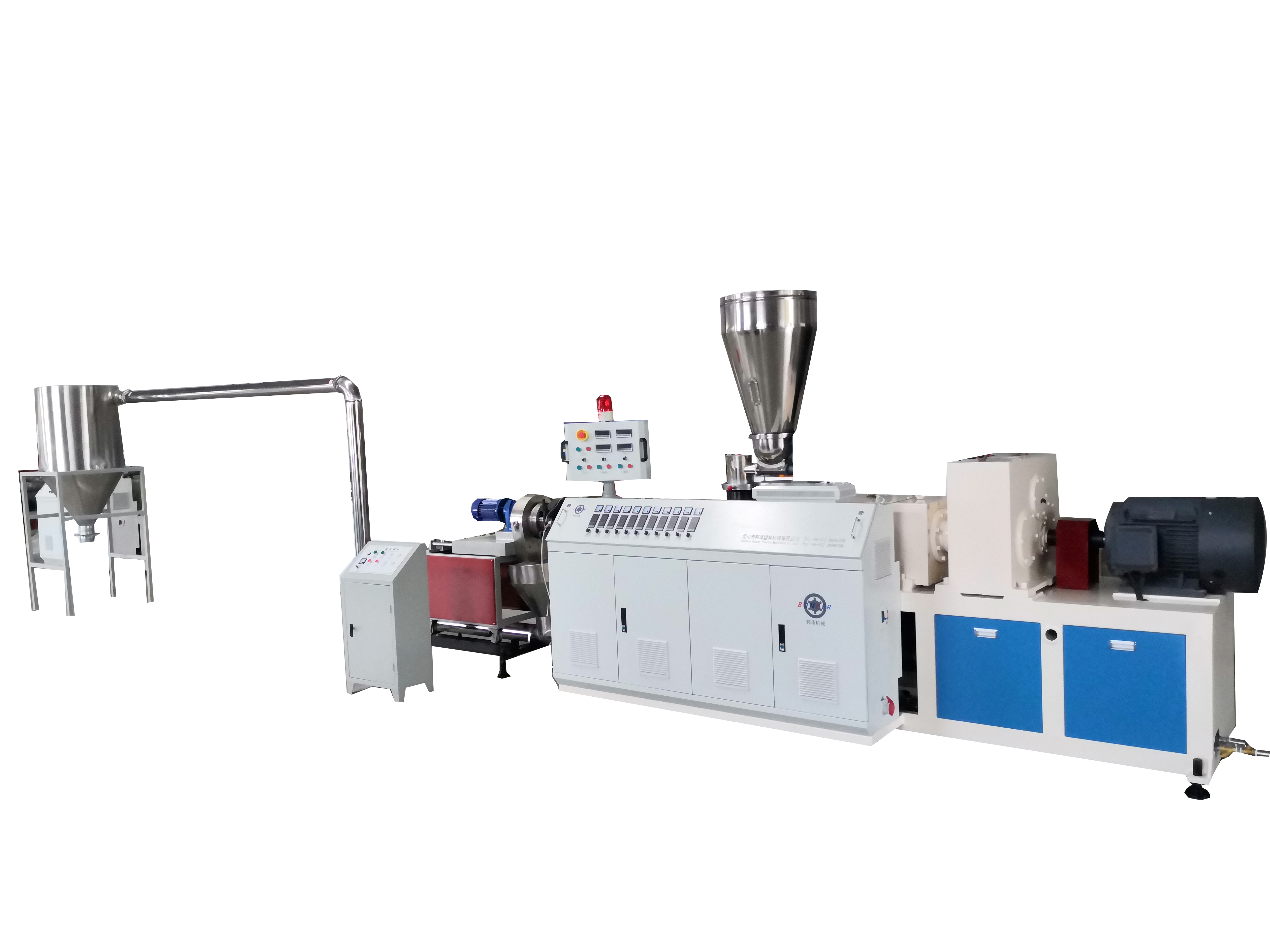
Processing rigid polyvinyl chloride powder requires precise mechanical handling. The material is highly heat-sensitive and viscous. Therefore, a reliable twin screw extruder is mandatory for this application. Single screw systems rely on high friction, which destroys the polymer chain. In contrast, conical twin screws provide superior plasticization, lower shear rates, and strictly controlled melt temperatures.
Take the industry-standard SJSZ-65/132 model as an example. When equipped with a 37kW motor, it delivers steady torque while preventing material degradation. Buyers must inspect the screw design closely. Bimetallic screws treated with specialized alloys offer massive resistance against the abrasive wear of calcium carbonate fillers. Furthermore, an integrated vacuum degassing system pulls out moisture and volatile gases. This single feature prevents internal voids in your finished profiles.
Think of the die head as the critical junction where molten plastic takes its definitive shape. Operators know the truth. If the flow channel design is even slightly flawed, the profile suffers from internal stress. This inevitably leads to brittle products that fail quality control. Premium tooling uses high-grade forged steel. Engineers optimize these dies using advanced fluid dynamics software to guarantee even melt flow distribution. High-quality die heads maintain consistent pressure across all sections. This is the only way to achieve the geometric accuracy required for strict construction standards.
Once hot plastic exits the die, rapid cooling is required to lock in the precise dimensions. Vacuum calibration tables handle this phase. These systems use chilled water combined with negative vacuum pressure to pull the soft plastic tightly against the sizing molds. This critical step stops warping, shrinkage, and surface defects cold. For reliable continuous operation, look for calibration tables featuring independent vacuum and water control valves. This allows your technicians to fine-tune the cooling process based on specific wall thicknesses.
Downstream equipment dictates the workflow pace of your entire plant. Synchronized caterpillar haul-off units pull the cooled profile at a constant speed. If the pulling speed fluctuates even a fraction of a millimeter per second, wall thickness variations occur immediately. Premium machines utilize servo-driven motors for exact speed synchronization with the main extruder. Following the haul-off, dust-free cutting saws execute clean, precise cuts without generating excessive debris. This prepares the profiles for immediate packaging.
Before investing in heavy machinery, factory owners must align their capabilities with market demands. The global push toward green building materials is reshaping the extrusion landscape. Construction sectors now demand multi-chambered window profiles with superior thermal insulation to meet strict international energy codes.
Consequently, extrusion lines must handle increasingly complex geometries and heavier profile weights. We also see a massive shift toward co-extruded surfaces. Consumers want weather-resistant, wood-grain finishes that do not fade under harsh ultraviolet light. Facilities relying on outdated, single-layer extrusion setups are rapidly losing high-margin contracts to competitors who have upgraded their technology to meet these modern energy and aesthetic standards.
Procuring industrial machinery means matching technical specifications with your daily output goals. A concrete evaluation framework prevents under-equipping your facility or over-spending your capital budget.
Extruder sizing must align perfectly with your target kilograms per hour. Overloading a small machine destroys the gearbox. Running a massive machine under capacity burns through electricity. Extruders are categorized by screw diameter and corresponding output.
| Extruder Model | Screw Diameter | Estimated Output (kilograms per hour) | Typical Application |
|---|---|---|---|
| SJSZ-51/105 | 51mm | 120 - 150 | Small profiles, edge banding, ceiling panels |
| SJSZ-65/132 | 65mm | 250 - 300 | Standard window frames, doors, trunking |
| SJSZ-80/156 | 80mm | 400 - 450 | Large door panels, wide window sills |
| SJSZ-92/188 | 92mm | 600 - 700 | Heavy-duty construction panels, wide boards |
Selecting the correct model ensures the motor operates within its optimal load range. This maximizes both lifespan and daily efficiency.
Electricity consumption severely impacts the cost per meter of your produced profile. Evaluating the energy efficiency of motors and heating elements is non-negotiable. Standardizing on reputable, high-tier inverters ensures motors only draw the power necessary for the current load. Furthermore, machines equipped with ceramic insulated heater bands drastically reduce heat loss. This lowers direct power consumption and reduces the thermal load on your factory cooling systems.
Today's manufacturing relies on data and repeatability. A sophisticated plastic profile production line must feature a central Programmable Logic Controller. Touch screen interfaces allow operators to monitor melt pressure, zone temperatures, and motor torque instantly. Advanced systems offer recipe storage. Once the optimal parameters for a specific profile are established, they are saved and recalled instantly during the next run. This eliminates manual dial adjustments, slashes setup time, and minimizes startup scrap.
Machinery downtime is the most expensive hidden cost in any factory. Stability means the equipment runs continuously with predictable output and minimal human intervention.
Formulations vary widely based on flexibility, weather resistance, and cost targets. A robust UPVC profile machine must handle high-filler recipes and recycled materials without clogging the feed throat. Advanced dosing and feeding systems ensure a consistent flow of dry blend into the extruder. This directly prevents the material surging that plagues lower-quality machines.
Polymer is highly sensitive to thermal degradation. If the melt temperature exceeds the safe threshold, the material burns. This results in black streaks and the release of corrosive gases. Precise Proportional Integral Derivative temperature controllers are essential. These controllers use predictive algorithms to maintain barrel temperatures within a strict one-degree margin. Coupled with accurate melt pressure transducers, the system automatically adjusts screw speed before pressure reaches critical levels.
Long-term stability is rooted in heavy steel construction. The extrusion process generates immense backpressure. Consequently, you need a heavy-duty gearbox with high-torque capacity and integrated thrust bearings to absorb this force safely. A robust, vibration-dampening steel frame prevents mechanical resonance. Excessive vibration accelerates the wear of moving parts and transfers directly to the die head, causing microscopic surface imperfections.
The window and door profile market demands strict dimensional tolerances. Investing in specialized equipment optimized for this sector significantly boosts operational efficiency and profit margins.
Window systems consist of casements, sliding frames, mullions, and glazing beads. Switching production between these shapes traditionally causes hours of costly downtime. Premium setups feature quick-release clamping mechanisms and modular calibration tables. Technicians can swap die heads and sizing molds rapidly, aligning water and vacuum connections in a fraction of the time. This agility is vital for fulfilling diverse orders profitably.
Consumer demand for colored and weather-resistant window frames is rising sharply. Instead of relying on secondary laminating, modern efficiency dictates co-extrusion. By adding a smaller secondary extruder to the main PVC window profile line, manufacturers seamlessly apply a thin layer of ASA or PMMA over the base material. This outer layer provides superior ultraviolet resistance and colorfastness. Integrating this process inline eliminates secondary steps entirely.
High-end lines stabilize quickly during the initial startup phase. This minimizes the length of off-spec profile generated before steady-state production is achieved. Smart factory layouts also integrate inline crushers. Any startup scrap from the cutting saw is immediately ground down and fed back into the mixing system. This closed-loop approach drastically reduces raw material waste.
The extrusion process presents complex physical challenges. The right machinery acts as a direct, engineered solution to these industry headaches.
Challenge: Profile Warping and Bending. This occurs when plastic cools unevenly, creating internal stress. It is solved by advanced vacuum calibration tables that provide uniform, 360-degree cooling and precise negative pressure.
Challenge: Poor Surface Finish. Surface defects are typically caused by unplasticized particles or friction within the die. This is resolved by optimized screw designs that ensure complete material melting, combined with mirror-polished die flow channels.
Challenge: Inconsistent Wall Thickness. Variations compromise structural integrity and waste expensive resin. This issue is mitigated by utilizing servo-controlled haul-off units that maintain a perfectly steady pulling speed.
The machinery is only one half of your investment. The manufacturer backing it is the other. Vendor selection requires careful scrutiny of their engineering capabilities.
No two factories are identical. A reputable supplier will not just sell a PVC profile extrusion machine off the shelf. They act as a dedicated engineering consultant. They must demonstrate the ability to modify electrical components to match local power grids and customize screw geometries based on your specific formulations.
Never accept shipment without a rigorous Factory Acceptance Test. A stringent testing protocol involves running the machine at the manufacturer's facility using your actual molds and raw materials. Your engineers must verify output capacity and dimensional accuracy before the equipment ever leaves the origin country.
Industrial machinery requires ongoing maintenance. Evaluate the manufacturer's commitment to after-sales support. Do they provide comprehensive operator training? Assess their spare parts inventory. Fast access to replacement heaters, thermocouples, and screw components prevents a minor breakdown from turning into weeks of lost production.
Focusing solely on the upfront price tag is a critical engineering error. The goal is to maximize profitability over a ten to fifteen-year lifecycle. Understanding the financial dynamics between price and value separates highly profitable plants from struggling ones.
Choosing the cheapest option leads to cost cascading. Budget machines harbor hidden costs that erode profit margins within the first two years. They frequently utilize substandard gearboxes. When a critical component fails, the entire line stops. Unplanned downtime incurs the cost of idle labor and delayed shipments. Cheap machines also struggle with inconsistent melt pressure, resulting in high material scrap rates. Every meter of defective profile is wasted resin and energy.
To justify premium equipment, utilize a straightforward Return on Investment framework. Higher Output plus Lower Energy Consumption plus Reduced Downtime equals a Faster Payback Period. Factor in the continuous daily savings from energy-efficient drives and the drastic reduction in wasted resin due to near-zero scrap rates.
The initial savings achieved by purchasing budget equipment are quickly neutralized by higher operating costs. The true value of a premium line lies in its predictability. You are purchasing stable melt pressure, precise dimensional accuracy, and peace of mind. Selecting a high-performance system is the most responsible financial decision a manufacturing facility can make.
Choosing the right extrusion equipment requires a careful balance of mechanical quality, automation, and long-term operational savings. Reliable manufacturers ensure your operations run smoothly daily, acting as engineering partners rather than just vendors. By prioritizing stable production hardware, you effectively future-proof your business against rising material costs. Higher efficiency directly translates to better profit margins. Stop letting outdated machinery drain your resources. Consult with industry experts to design a customized solution that fits your specific factory needs. Explore high-performance equipment options at Bonzer Extrusion and elevate your production output today.
With rigorous maintenance and proper operational protocols, a high-quality machine reliably operates for ten to fifteen years. The structural frame and heavy-duty gearboxes are designed for long-term industrial use. However, specific high-wear components require periodic replacement. The barrel and screw flights typically need replacement or refurbishment every three to five years, depending on the abrasiveness of your formulation.
Yes, versatility is a major advantage of modern technology. A single production line manufactures a wide variety of products by changing the extrusion die head and the downstream calibration molds. The same machine can produce window frames, ceiling panels, and cable trunking. Operators simply remove the current tooling, install the new mold, and adjust the parameters on the control panel.
Polyvinyl chloride is a heat-sensitive polymer. If exposed to excessive temperatures or prolonged shear stress, it degrades and burns. A twin screw extruder is specifically engineered to handle these thermal limitations. Unlike single screws which rely on high friction, twin screws utilize an intermeshing design. This allows for superior mixing and compounding at much lower rotational speeds and temperatures.
Yes, multi-strand extrusion technology is highly effective for drastically increasing output. Dual-strand or multi-strand lines produce multiple profiles simultaneously from a single extruder. This setup is particularly advantageous for manufacturing smaller, high-volume profiles like edge banding or narrow cable trunking. It doubles or triples production efficiency while saving valuable factory floor space.
A standard profile line requires a linear installation space of approximately twenty to thirty meters in length, and two to three meters in width. This footprint accommodates the raw material feeder, main extruder, vacuum calibration table, haul-off unit, and cutting saw. Factory planners must also allocate adequate surrounding space for safe operator movement, forklift access, and raw material staging.
Power consumption varies based on the extruder size and downstream equipment. For a standard SJSZ-65/132 line, the main motor is typically 37kW, with total installed power around 80kW to 100kW. However, actual running power is usually 60 to 70 percent of the installed capacity once the heating zones reach their target temperatures and the high-efficiency inverters stabilize the load.
Optimal cooling requires unimpeded water flow and strong negative pressure. Factory technicians must routinely inspect and clean the water filters to prevent calcium scale buildup from blocking the spray nozzles. Additionally, the vacuum pump seals should be checked monthly for air leaks. Maintaining clean water lines and tight vacuum seals ensures the profile cools evenly without warping.


