
English ![]()

Views: 0 Author: Site Editor Publish Time: 2026-07-28 Origin: Site
Transitioning from traditional plastics or timber to Wood Plastic Composites introduces severe processing challenges. Manufacturers face complex rheological and thermal variables immediately. Achieving consistent density, perfect surface finish, and high mechanical strength requires extraordinary precision. Generic plastic processing equipment simply cannot handle these rigorous demands. Standard extruders struggle to process highly filled wood-fiber mixtures efficiently. They often fail to manage the delicate balance between polymer melting and wood fiber preservation. To bridge the gap between raw formulation and commercial-grade profiles, you need highly specialized equipment. The critical variable in this manufacturing equation is a dedicated WPC Production Line. It provides the exact mechanical control required for high-margin composite extrusion. By utilizing purpose-built machinery, manufacturers can confidently scale production while maintaining strict quality standards.
Process Complexity: WPC extrusion requires precise thermal and shear control to prevent wood fiber degradation while ensuring polymer matrix encapsulation.
Equipment Specificity: A dedicated WPC production line utilizes specialized twin-screw configurations and heavy-duty wear resistance not found in standard extruders.
Investment Lens: Evaluating machinery must balance output capacity with energy efficiency, formulation flexibility, and tooling longevity.
Risk Mitigation: Success depends heavily on moisture control upstream and automated downstream calibration to prevent warping and voids.
Many manufacturers attempt to repurpose standard single-screw or generic twin-screw extruders for composite materials. They quickly discover severe mechanical and chemical limitations. These standard lines struggle against the unique viscosity of wood-fiber blends. WPC formulations exhibit extreme shear sensitivity. They flow much differently than neat polymers do. You cannot simply force these dense mixtures through a standard barrel without consequences. The internal friction generates massive amounts of unwanted heat.
Wood flour burns at surprisingly low temperatures. Often, this degradation threshold sits directly below the optimal melting point of the polymer matrix. This reality creates an incredibly narrow processing window. If you push the extrusion temperature too high, the wood fibers scorch. This scorching emits foul odors and turns the profile dark. If you keep temperatures too low, the polymer fails to encapsulate the fibers properly. Poor encapsulation leads to weak, crumbly profiles.
Moisture presents another major hurdle in composite manufacturing. Wood fibers naturally absorb water from the surrounding air. Uncontrolled moisture in the extruder barrel turns rapidly into steam. This volatile gas leads to severe internal foaming. You will see surface defects, blistering, and structural weakness in the final profile. The final extruded product becomes brittle and entirely unsellable on the commercial market.
Furthermore, wood fibers act like abrasive sandpaper inside the machine. High fiber content rapidly degrades standard barrels and screw flights. You will face excessive downtime and constant parts replacement. This aggressive mechanical wear easily destroys your intended return on investment. Relying on standard extrusion equipment for highly filled composites is a costly mistake.
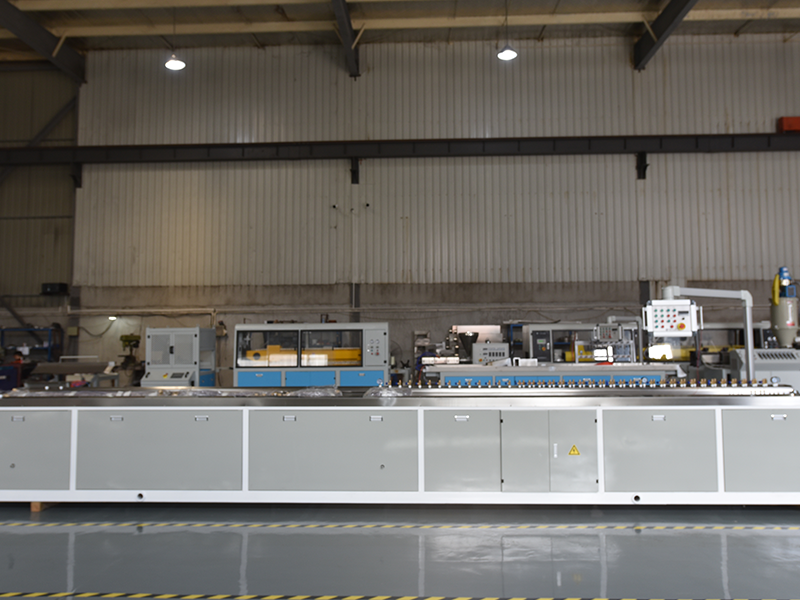
Overcoming these processing hurdles requires specialized mechanical engineering. A modern WPC Production Line incorporates components specifically designed for composite materials. Every module addresses the unique rheology and thermal sensitivity of wood-plastic blends.
Parallel or conical twin-screw extruders form the heart of the system. Conical twin-screw extruders excel at processing PVC-based composites. They generate high extrusion pressure at relatively low rotational speeds. Parallel twin-screw extruders handle PE and PP formulations beautifully. Both configurations provide the necessary shear force. They ensure uniform mixing without generating excessive friction heat. This delicate balance prevents the wood flour from burning during encapsulation.
Advanced degassing systems keep dangerous volatiles in check. Multi-stage vacuum venting removes residual moisture and trapped gases directly from the melt. Specialized vacuum pumps draw these gases out before the material reaches the die. This critical extraction phase ensures incredibly dense, defect-free profiles. Without it, internal steam bubbles compromise the structural integrity.
Precision tooling matters immensely in composite extrusion. Specialized die designs manage the unique swell and flow behavior of WPC melts. Designers often extend die lands to balance internal pressures evenly. They incorporate internal heating zones to keep the material flowing smoothly at the edges.
Finally, downstream calibration and cooling systems freeze the profile shape instantly. Extended vacuum calibration tables pull the molten composite against precision sizing molds. Powerful water cooling circuits rapidly drop the core temperature. This rapid cooling step prevents post-extrusion warping and dimensional shrinkage.
| Feature Focus | Standard Plastic Extruder | Dedicated Composite Extruder |
|---|---|---|
| Screw Configuration | Single screw or generic twin screw | Conical or parallel twin-screw tailored for high shear |
| Wear Resistance | Standard nitrided steel metallurgy | Bimetallic coating and hardened alloy treatments |
| Degassing Capability | Minimal or single-stage atmospheric venting | Multi-stage, high-capacity vacuum venting pumps |
| Thermal Control | Standard electrical heating and cooling bands | Precise oil-based core cooling and advanced blowers |

Decision-makers must evaluate machinery beyond basic output specifications. You need a structured approach to assess a WPC Production Line effectively. A holistic evaluation ensures long-term operational success.
First, consider formulation flexibility carefully. Can the line handle different base polymers efficiently? PE, PP, and PVC each behave differently under heat and pressure. Furthermore, assess the machine's ability to process varying wood-fill ratios. Premium machines comfortably manage mixtures containing up to 70% wood flour. They accommodate various additives, lubricants, and coupling agents without stalling.
Next, balance energy efficiency against raw output capacity. You must calculate the true processing cost per kilogram of produced material. Evaluate the following key power consumption metrics:
Main drive motor efficiency ratings and gearbox friction losses.
The energy draw of individual barrel heater bands.
Power requirements for downstream vacuum calibration pumps.
Chilled water circulation pump efficiency.
High-yield systems often use variable frequency drives to optimize power consumption. These drives adjust energy usage dynamically based on real-time load requirements.
Durability and metallurgy directly impact overall profitability. Combatting abrasive wear remains critical in composite manufacturing. Assess the vendor's requirement for bimetallic screws and hardened barrels. Superior metallurgy extends operational lifespans significantly, reducing replacement costs and unplanned downtime.
Lastly, scrutinize automation and quality control features. Look for PLC-based closed-loop systems. These interfaces monitor melt pressure and temperature in real-time. Automated adjustments prevent material degradation and dramatically reduce scrap rates. Intelligent software can alert operators before a catastrophic pressure failure occurs.
Even the best machinery cannot fix flawed operational processes. Navigating WPC manufacturing requires acknowledging specific on-the-ground realities. Theoretical throughput rarely matches initial factory floor production. You must prepare your team for the nuances of composite processing.
First, pre-processing prerequisites are non-negotiable. A world-class WPC Production Line will still fail if upstream material preparation is inadequate. You must mill wood flour to consistent micron sizes. You must also dry it aggressively. Reducing moisture content below 1-2% is absolutely mandatory before extrusion. Skipping the drying phase guarantees product failure.
Second, anticipate the tooling break-in period. Commissioning a new die involves a steep learning curve. Operators must balance die temperatures precisely across multiple zones. They will spend time fine-tuning calibration table vacuum pressures. Expect some initial material waste during this delicate setup phase.
To succeed consistently, your operating team must master several critical skills:
Understanding specific formulation behavior and viscosity changes under high shear stress.
Recognizing early visual signs of thermal degradation in the polymer melt.
Adjusting calibration vacuum levels to counter ambient humidity and temperature changes.
Calibrating downstream haul-off speeds to prevent profile stretching or buckling.
Finally, accept rigorous maintenance realities. You must set realistic expectations for screw rebuilding schedules. Establish strict routines for die cleaning and calibration mold polishing. Residue buildup inside the die alters flow dynamics rapidly. Regular, meticulous maintenance preserves tight product tolerances over the long run.
Purchasing extrusion machinery initiates a long-term commercial partnership. You must evaluate potential vendors using strict, uncompromising criteria. Do not rely solely on glossy brochures or theoretical specifications.
Demand a physical proof of concept. Require vendors to run your specific WPC formulation through their test lab. Never finalize machinery specifications based on theoretical performance alone. Physical trials reveal hidden rheological issues before delivery. They expose feeding problems, venting limitations, and die flow imbalances.
Decide between turnkey and standalone solutions. Evaluate whether the vendor provides end-to-end integration. A turnkey partner supplies dosing units, mixing plants, extruders, downstream cutting saws, and embossing machines. Single-source integration often simplifies troubleshooting. It eliminates finger-pointing between different equipment suppliers when a line malfunction occurs.
Investigate after-sales support and spare parts availability thoroughly. Assess the domestic inventory of critical wear parts. Screws, barrels, and die plates will eventually wear out due to abrasion. Waiting months for overseas shipments causes catastrophic unplanned downtime. Ensure your vendor can ship replacement components rapidly.
Ensure rigorous compliance and safety standards. The line must meet regional machinery safety directives, such as CE marking. Look for automated shutdown protocols. These safety interlocks protect both the machinery and operators during dangerous overpressure events. Advanced lines feature burst discs and electronic pressure transducers to mitigate disaster.
Transitioning to WPC manufacturing hinges on perfect alignment. You must harmonize formulation chemistry with precise mechanical execution. Generic machinery falls short of these highly demanding requirements. Specialized extrusion equipment provides the thermal and shear control necessary to succeed. Without it, managing the sensitive balance between wood fibers and plastics becomes nearly impossible.
When making your final decision, look far beyond the baseline sticker price. Evaluate the long-term return on investment based on wear-part longevity, energy efficiency, and scrap reduction. High-quality metallurgy and smart automation pay massive dividends over years of continuous operation. Skimping on core components inevitably leads to inferior product quality and lost market share.
Take the next step toward optimizing your composite manufacturing capabilities today. Schedule a technical consultation with an experienced equipment expert. Request a customized ROI analysis tailored to a specific WPC Production Line configuration. Doing so will ensure your project achieves maximum commercial success and operational stability.
A: Generally, no. PE and PVC polymers exhibit vastly different rheological behaviors and thermal requirements. PVC processing typically requires conical twin-screw extruders to manage shear and prevent burning. PE or PP composites run better on parallel twin-screw systems. Processing both on one line compromises quality and efficiency.
A: Lifespan depends heavily on fiber content and equipment metallurgy. Standard nitrided steel components typically last only 6 to 12 months due to the abrasive nature of wood flour. However, investing in bimetallic screws and specially hardened barrels can extend this lifespan significantly under normal operating conditions.
A: A co-extrusion setup utilizes a secondary extruder alongside the main machine. While the primary extruder forms the WPC core, the secondary unit applies a thin, high-performance polymer cap layer. This protective outer shell drastically improves weather resistance, UV stability, and scratch resistance compared to standard profiles.
A: The industry standard dictates reducing wood flour moisture to below 1-2%. Bypassing this crucial drying step causes trapped water to vaporize during extrusion. This internal steam creates severe foaming, surface defects, and structural voids, ultimately leading to complete profile failure and rejected products.


