
English 
Views: 0 Author: Site Editor Publish Time: 2026-09-16 Origin: Site
The demand for bespoke Wood Plastic Composite (WPC) products—ranging from ultra-durable outdoor decking to intricate interior architectural cladding—is rising at an unprecedented pace. However, standard off-the-shelf machinery often falls disastrously short when tasked with specialized designs. I have spent countless hours on factory floors watching poorly engineered equipment inevitably lead to erratic melt pressures, excessive material waste, and crippling machine downtime. To safeguard your capital investment, partnering with a reliable manufacturer who deeply understands the mechanical nuances of custom engineering is absolutely critical.
In this comprehensive guide, we will dissect the technical capabilities, operational intricacies, and business practices you must evaluate when selecting a manufacturing partner. By understanding the mechanical realities of composite processing, you can confidently source a high-performance wood plastic composite machine tailored to your specific commercial objectives.
A dependable machinery partner must offer deep customization in screw geometry and die heads to accommodate highly specific wood-to-plastic formulation ratios.
Opting for an integrated, end-to-end production setup ensures seamless synchronization from raw material compounding to final surface treatment.
Modern production lines must feature energy-efficient drives, smart PLC controls, and robust co-extrusion capabilities to meet current market demands.
Evaluating a vendor goes far beyond the initial quote. Comprehensive after-sales support, on-site operator training, and strict global certifications (like CE) are non-negotiable.
Consistency dictates profitability. The ability to maintain uniform melt quality and dimensional stability across thousands of hours of operation separates elite manufacturers from the rest.
Manufacturing composite profiles is inherently more volatile than standard thermoplastic extrusion. Pure plastics melt predictably. In contrast, introducing organic materials into a polymer matrix creates a highly sensitive thermal and mechanical environment. Custom projects amplify these hurdles. Unique geometric shapes and stringent performance metrics demand absolute control over every millimeter of the production line.
From an industry-wide perspective, we are currently witnessing a massive pivot toward circular manufacturing. Driven by eco-conscious construction codes, producers are increasingly blending post-consumer recycled plastics with agricultural residues. Processing recycled materials introduces unpredictable melt flow indices (MFI) and volatile impurities. Consequently, modern extrusion equipment must possess superior vacuum degassing capabilities (typically maintaining -0.08 MPa) and highly adaptive thermal controls to prevent catastrophic line failures. A rigid, one-size-fits-all machinery approach fails entirely here because varying custom ratios require vastly different shear rates and temperature profiles.
Walk up to any struggling WPC line, and the bottleneck usually starts upstream. Blending natural wood fibers with polymers like Polyethylene (PE), Polypropylene (PP), or Polyvinyl Chloride (PVC) is notoriously difficult. Wood fibers naturally retain moisture and act as potent thermal insulators. Imagine your operator running a high-wood-content decking formula (e.g., 60% wood flour). If the moisture isn't extracted properly in the heating mixer, steam pockets will form inside the extruder barrel. By the time the melt exits the die, you will see micro-blisters on the profile's surface and experience sudden, dangerous pressure drops.
Architects and builders consistently push the boundaries of design. They frequently request multi-chambered profiles, asymmetrical interlocking mechanisms, or ultra-thin walls. Extruding these bespoke shapes without warping, bowing, or structural weakness requires immense precision.
Differences in wall thickness across a custom profile lead to uneven cooling rates. If the internal structural chambers cool slower than the external walls, the operator will often hear a faint cracking sound as internal stresses build up. This causes the profile to warp severely mere minutes after it leaves the calibration unit. Standard equipment lacks the targeted cooling circuits and precise melt flow distribution required to manage these bespoke geometric designs.
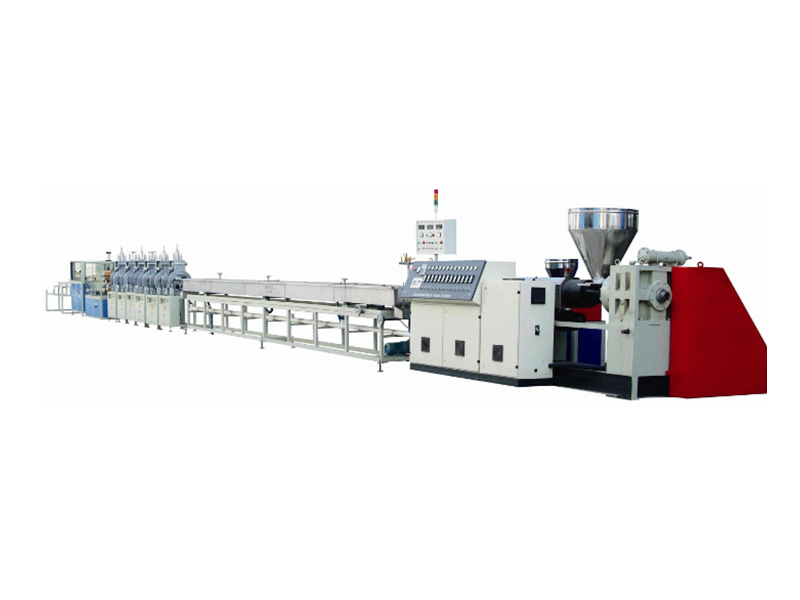
To overcome the mechanical realities of bespoke profile manufacturing, a top-tier vendor must possess the engineering capacity to tailor the machinery to your exact blueprint. This requires moving entirely away from standardized catalogs and engineering a customized extrusion line from the ground up.
The screw and barrel assembly serves as the beating heart of the entire operation. Its precise design dictates the shearing, melting, mixing, and venting of the composite blend. For custom applications, standard screw profiles often generate excessive friction—which scorches the heat-sensitive wood flour—or insufficient shear, resulting in a poorly homogenized compound with abysmal mechanical strength.
An elite engineering team calculates the screw profile based exclusively on your target polymer and wood ratio. For example, a properly configured SJSZ 65/132 conical twin-screw setup is typically deployed for PVC-based formulas due to its gentle compounding capabilities at lower shear rates, comfortably maintaining a 200-250 kg/h output. Conversely, parallel twin-screw extruders dominate PE/PP-based production to ensure aggressive mixing. Because wood fibers are notoriously abrasive, the manufacturer must also utilize bimetallic screws treated with specialized tungsten-carbide alloys (like PTA-6) to ensure continuous output over time without severe degradation.
The extrusion die head is tasked with shaping the pressurized, molten composite into its final form. To achieve this in custom projects, the die must be engineered using advanced 3D flow simulation software. This ensures that the highly viscous material flows evenly through all sections of the mold, regardless of varying wall thicknesses.
Meticulous engineering prevents "dead zones" where material could stagnate, degrade, and burn. Beyond the die, the calibration molds—which aggressively cool and solidify the profile under vacuum—must feature custom-routed water-cooling channels. This strategic thermal management ensures dimensional accuracy, mitigates shrinkage, and guarantees the flawless surface finish required for premium architectural profiles.
| Production Metric | Standard Off-the-Shelf Machinery | Custom-Engineered WPC Line |
|---|---|---|
| Screw Design | Generic profile; high risk of wood flour scorching. | Tailored pitch and depth; optimized for specific MFI and wood ratios. |
| Die Head Flow | Prone to dead zones in complex, multi-chamber designs. | 3D flow-simulated channels; ensures uniform melt distribution. |
| Vacuum Degassing | Basic single-stage venting; struggles with recycled impurities. | Heavy-duty dual-stage vacuum (up to -0.08 MPa) for flawless surfaces. |
| Cooling Calibration | Standard water baths; leads to warping on uneven wall thicknesses. | Custom-routed cooling circuits; freezes profile instantly to exact specs. |
Buying a mixer from one vendor and an extruder from another is a recipe for disaster on the production floor. Incompatibilities between the high-speed mixer, the main extruder, and the downstream haul-off units can cripple a factory. Partnering with a facility capable of delivering a synchronized, end-to-end turnkey extrusion solution effectively neutralizes these integration risks.
In composite manufacturing, consistency is the sole differentiator between a highly profitable shift and a high-scrap-rate disaster. If the upstream heating mixer fails to evaporate adequate moisture, or if the pelletizer generates uneven granules, the main extruder will constantly fight surging melt pressures. A sophisticated manufacturer understands this mechanical interconnectedness. They provide a unified workflow where every motor, sensor, and drive communicates harmoniously through a centralized control hub.
A truly comprehensive production facility encompasses the entire lifecycle of the material. Specifically, the critical stages of a fully integrated setup include:
Material Preparation: Industrial wood millers and thermal dryers reduce scrap to uniform flour (e.g., 60-80 mesh) while dropping moisture content strictly below 2%.
Compounding: High-speed hot/cooling mixer units blend the flour, polymers, coupling agents, and lubricants uniformly without triggering premature melting.
Core Extrusion: The main twin-screw extruder (e.g., SJSZ 80/156 for high output) melts, homogenizes, and forces the composite through the custom die under immense pressure.
Shaping & Cooling: Vacuum calibration tables utilize immense negative pressure and chilled water to freeze the profile precisely to the bespoke dimensions.
Downstream Processing: Haul-off tractors pull the profile at a synchronized speed (typically 0.5-3.0 m/min), while automated saws cut it to exact commercial lengths without chipping the edges.
Surface Finishing: In-line embossing rollers or off-line sanding machines apply 3D wood grain textures for a natural, anti-slip aesthetic.
The technological landscape of polymer processing is evolving rapidly. When auditing potential partners, the technological sophistication of their WPC extrusion equipment serves as a primary indicator of their reliability and forward-thinking engineering.
One of the most defining trends in the current architectural market is the aggressive shift toward co-extrusion (often referred to as capped composites). Consumers now demand ultra-low maintenance outdoor living spaces. To meet this, modern decking features a core layer of standard composite wrapped entirely in a thin, highly durable engineered polymer shield (such as ASA or modified PE).
This capping layer provides unmatched resistance to UV fading, moisture penetration, and deep scratching. For custom profiles, your manufacturing partner must demonstrate proven expertise in engineering complex co-extrusion feedblocks. The flow channels must be meticulously calculated to distribute the capping layer evenly—typically between 0.5mm and 1.0mm thick—across severe angles and deep grooves. Flawed die designs will result in uneven shield thickness, inevitably leading to localized wear and catastrophic delamination in the field.
Depending on your target demographic, your facility may need to alternate between producing PE-based outdoor decking and PVC-based indoor acoustic wall panels. These base polymers possess drastically divergent rheological properties. PVC is highly shear-sensitive and prone to rapid thermal degradation, while polyolefins require aggressive mechanical shearing to blend with wood flour.
Elite machinery builders engineer highly versatile solutions. While dedicated, single-material lines are the gold standard for maximum efficiency, highly capable engineers can design modular components and interchangeable barrel setups. This flexibility allows a single base frame to process varying material types with minimal changeover time, showcasing a profound grasp of polymer science.
Extruding dense composites is a heavily energy-intensive endeavor. World-class equipment integrates advanced power-saving technologies that dramatically widen your operational profit margins. Upgrading from standard AC motors to Permanent Magnet Synchronous Motors (PMSM) paired with intelligent Variable Frequency Drives (VFDs) can slash energy consumption by up to 30%.
Beyond raw power, the integration of smart PLC touch-screen interfaces (utilizing architecture from Siemens S7 series or Beckhoff) is vital. These systems allow operators to monitor melt pressure, motor torque, and specific heating zones in real-time. By enabling recipe saving and automated data logging, these smart controls remove the guesswork from the factory floor, ensuring exact product replication batch after batch.
The operational lifespan of heavy industrial machinery is directly proportional to the quality control standards enforced during its assembly. Procurement teams must rigorously verify build quality long before the equipment is ever crated for ocean freight.
An extrusion line is an intricate assembly of hundreds of high-stress components. Because composite production generates massive continuous torque and sustained mechanical vibration, utilizing substandard electrical contactors or unbranded gearboxes will inevitably lead to premature, catastrophic failure.
Leading manufacturers are entirely transparent about their bill of materials. They exclusively source critical components from globally recognized brands. The presence of ABB or Yaskawa inverters, Omron temperature controllers, Schneider electrics, and specialized heavy-duty thrust bearings (like JC gearboxes) indicates a commitment to unyielding quality. Furthermore, utilizing standardized premium components guarantees that your maintenance team can source replacement parts locally, anywhere in the world.
Compliance with international manufacturing directives is a baseline requirement. Ensure the manufacturer holds valid ISO 9001 certifications, alongside CE or UL marks for electrical safety, which are legally mandatory for equipment entering European or North American jurisdictions.
More critically, a dependable partner will mandate a comprehensive Factory Acceptance Test (FAT). During this phase, the manufacturer runs your specific raw material formulation through your custom-engineered mold at their own facility. This live demonstration validates output capacity, dimensional stability, and continuous system pressure. Buyers should always demand unedited, continuous video footage and detailed dimensional inspection reports before authorizing final shipment.
The successful delivery of the machinery marks the beginning of the operational phase, not the end of the vendor relationship. The sheer complexity of composite processing dictates that post-purchase technical support is a defining characteristic of a truly reliable profile extrusion supplier.
A top-tier firm does not simply drop shipping containers at your loading dock and walk away. They dispatch seasoned mechanical and electrical engineers directly to your facility. These technicians oversee the precise laser-leveling of the extruder, the alignment of the downstream cooling tanks, and the integration of industrial water and power supplies. Commissioning involves running the machine under your local environmental conditions to fine-tune PID controllers and synchronize haul-off speeds, proving the line can hit commercial capacities.
Selling heavy metal is straightforward; transferring deep process know-how is the true challenge. A reputable supplier acts as a long-term technical consultant. They provide exhaustive on-site training for your workforce, covering standard operating procedures (SOPs), emergency shutdown protocols, and screen-changer maintenance.
Additionally, they assist with the highly guarded secret of recipe formulation. Achieving the perfect balance of wood flour, virgin or recycled polymers, UV stabilizers, and lubricants takes years to master. Manufacturers with in-house testing laboratories will share baseline recipes and help your team fine-tune the formulation during the commissioning phase to optimize aesthetic quality while minimizing raw material costs.
Selecting the right engineering partner requires systematic, unemotional due diligence. B2B procurement teams should utilize the following actionable criteria to evaluate potential suppliers during the vetting process:
Verify Gearbox and Motor Specs: Do not accept generic descriptions. Ensure the gearbox torque rating and motor power (e.g., 55kW or 75kW) actually match the intended output capacity of your custom profile.
Evaluate In-House R&D: Verify if the supplier employs an in-house engineering team utilizing advanced 3D CAD and flow simulation software. Tour their facility (virtually or physically) to confirm they operate high-precision CNC machining centers rather than outsourcing mold production.
Assess the Scope of Integration: Determine if they actually manufacture a true end-to-end system. A reliable partner supplies and integrates the upstream mixers, the core extruder, and the downstream embossing machines under one unified warranty.
Analyze Technical Communication: Gauge their engineering depth during the quotation phase. If their sales team provides a generic quote without asking detailed questions about your specific wood moisture content, polymer MFI, or local power voltage, they are not equipped for custom engineering.
Request Documented Evidence: Demand engineering drawings, raw output data, and video evidence of similar custom WPC profiles they have successfully commissioned for other international clients.
Executing custom WPC projects demands far more than just purchasing steel and motors; it requires securing a deeply knowledgeable engineering partner. Your commercial success relies entirely on precise custom screw designs, flawless turnkey synchronization, advanced co-extrusion technology, and unwavering post-sale support.
Investing the time and capital into a proven, elite machinery manufacturer minimizes catastrophic material waste, drastically reduces expensive machine downtime, and ensures your bespoke architectural products dominate a highly competitive market. Do not compromise on the foundation of your production facility. If you are looking to scale your operations or tackle complex profile designs, explore the high-performance solutions at KS-Bonzer. Contact their extrusion engineering experts today to discuss your specific profile requirements, analyze your material formulations, and engineer a solution built for decades of profitability.
A standard extrusion line is pre-engineered with generic screw profiles and heating zones, designed strictly for producing common, simple geometries using standard virgin materials. In stark contrast, a customized line is engineered from the ground up based on your specific blueprint. It features specially machined screw and barrel geometries, custom-calibrated flow die heads, and tailored thermal zones explicitly designed for your unique wood-to-plastic ratio and complex geometric shapes, ensuring optimal melting without structural defects.
Moisture is the enemy of composite extrusion. If the wood flour retains more than 2% moisture before entering the extruder, the heat of the barrel will convert that water into steam. This steam creates extreme pressure fluctuations, leading to surging at the die head. Ultimately, this results in micro-blisters on the surface of the finished profile, structural weakness, and a high likelihood of the profile snapping during installation.
Generally, PE/PP and PVC require vastly different processing environments due to their distinct rheological behaviors and thermal sensitivities. PVC mandates low-shear conical twin screws to prevent burning, while PE relies on aggressive parallel twin screws for thorough compounding. While highly capable engineers can design modular machines with interchangeable screw and barrel assemblies to accommodate both materials on one base frame, dedicated lines are strongly recommended to maintain maximum operational efficiency and minimize costly changeover times.
A turnkey solution encompasses every single piece of machinery required to transform raw, unprepared materials into a finished, market-ready architectural product. This holistic package includes upstream equipment (wood pulverizers, thermal dryers, high-speed compounding mixers, and pelletizers), the core twin-screw extrusion machinery, and all downstream equipment (vacuum calibration tanks, haul-off tractors, and precision saws). It also fully integrates final surface finishing equipment, such as heavy-duty sanding, wire-brushing, or 3D embossing machines, all synchronized through a unified PLC control system.
While the initial capital expenditure for a premium, custom-engineered line is higher than standard equipment, the Return on Investment (ROI) is typically realized within 12 to 18 months. This rapid payback is driven by drastically reduced scrap rates, lower energy consumption (thanks to PMSM motors), minimized maintenance downtime, and the ability to command premium market prices for flawless, complex architectural profiles.
WPC is an incredibly complex composite consisting of tough thermoplastic polymers and delicate natural wood flour. Wood flour is extremely sensitive to heat and highly prone to scorching, while the plastic matrix requires sustained high temperatures to achieve a proper melt state. The screw geometry must be perfectly engineered to provide the exact amount of mechanical shear force necessary to mix these opposing materials homogeneously. If the design generates excess friction, the wood fibers will degrade and burn; if it generates too little shear, the plastic will fail to encapsulate the fibers, leading to a weak, brittle profile that will fail in the field.


