
English 
Views: 0 Author: Site Editor Publish Time: 2026-07-25 Origin: Site
Successful PVC extrusion represents a delicate equilibrium. Even precision-formulated compounds will fail if they lack proper handling. Your extrusion equipment must deliver specific thermal and shear controls. The polymer's extremely narrow processing window demands this high level of precision. Fluctuations in material inputs directly lead to rapid degradation. Poor machine zoning causes severe dimensional instability. They create excessive scrap, hidden defects, and highly costly downtime for your facility. We designed this article to provide a clear, technical evaluation framework. It helps you align compound variables with exact extruder capabilities. You should apply these principles specifically when assessing or troubleshooting a commercial PVC profile extrusion line. By understanding these interactions, you will learn how to stabilize your continuous process. You can effectively protect your hardware investment while consistently hitting tight product tolerances.
Compound chemistry dictates hardware: Lubricant balance and filler ratios directly determine the required screw geometry and motor torque.
Thermal management is non-negotiable: PVC is highly heat-sensitive; precise melt temperature control relies more on barrel cooling and screw shear than on external heater bands.
Equipment evaluation requires specificity: Investing in a PVC profile extrusion line requires vetting the OEM’s approach to degassing, torque distribution, and die-head pressure stability.
Proactive risk mitigation: Standardizing process zones (feed, compression, metering) is the only reliable defense against material degradation and profile surging.
Process instability directly threatens manufacturing profitability. You cannot afford to ignore the hidden financial impacts of mismatched equipment and materials. Manufacturers frequently experience excessive scrap rates during initial startup phases. Operators waste expensive resin trying to stabilize the calibration table. High-filler compounds act like sandpaper inside the machine. They cause accelerated barrel wear over time. Poor plasticization leaves internal stresses inside the finished profile. These stresses eventually warp the product after it cools. This leads to immediate spikes in QA rejection rates and unhappy customers.
Establishing clear success criteria helps you measure process control. A truly optimized extrusion process exhibits several undeniable traits. You should aim for the following baseline standards:
Consistent melt pressure: Transducer readings fluctuate less than two percent during continuous operation.
Uniform plasticization: The melt exits the die smooth and homogenous without any signs of yellowing or degradation.
Stable dimensional tolerances: The profile holds its shape perfectly upon entering the vacuum calibration table.
Industry professionals must challenge the persistent myth of the "universal" extruder. No single machine processes every polymer perfectly. Equipment must be engineered specifically for the precise material you run. Rigid PVC (UPVC) demands entirely different shear profiles compared to flexible PVC (SPVC). You must abandon the idea of a one-size-fits-all solution. Attempting to run rigid window profiles on a machine designed for flexible tubing guarantees failure. You must tailor your hardware to your exact chemical formulation.
Your compound formulation acts as the blueprint for your machinery requirements. You cannot specify motor sizes or screw geometries without understanding the resin first. The molecular weight of the PVC resin directly dictates the melt flow characteristics. Industry standards measure this using a K-Value. Rigid PVC profiles typically utilize K-65 to K-68 resins. These resins possess high viscosity and resist easy melting. They require immense drive power and high-torque gearboxes. Conversely, flexible applications often use K-70 or higher. You must match your extruder drive capacity to the K-Value of your primary resin.
The lubricant balance within your formulation controls the entire fusion process. PVC relies heavily on specific additives to process correctly. We categorize these critical additives into two distinct types. Internal lubricants reduce the melt viscosity. They lower the friction between individual polymer chains. External lubricants perform a different job. They prevent the hot melt from sticking to the barrel and screw surfaces. An improper balance causes immediate processing failures. Too much external lubrication delays fusion. This creates a weak profile structure. Too little external lubrication causes premature fusion. The material overheats and degrades inside the barrel.
Below is a breakdown of how different lubricants affect the extrusion cycle.
| Lubricant Type | Primary Function | Effect of Excess Amount | Effect of Deficient Amount |
|---|---|---|---|
| Internal (e.g., Ester Waxes) | Lowers polymer friction, improves melt flow. | Low melt strength, poor dimensional stability at die. | High melt viscosity, excessive shear heat buildup. |
| External (e.g., Paraffin Waxes) | Prevents polymer adhesion to metal hardware. | Delayed fusion, surging, weak mechanical properties. | Premature fusion, rapid thermal degradation, burning. |
Fillers and additives also exact a heavy mechanical toll on your equipment. Calcium carbonate (CaCO3) reduces compound costs and increases profile stiffness. Titanium dioxide (TiO2) provides UV stability and bright white coloration. However, high-filler formulations are highly abrasive. They rapidly erode standard steel components. You must specify bimetallic screws and barrels to combat this abrasive wear. Tungsten carbide coatings drastically extend the lifespan of your extrusion hardware. Ignoring this requirement leads to frequent, expensive machinery overhauls.
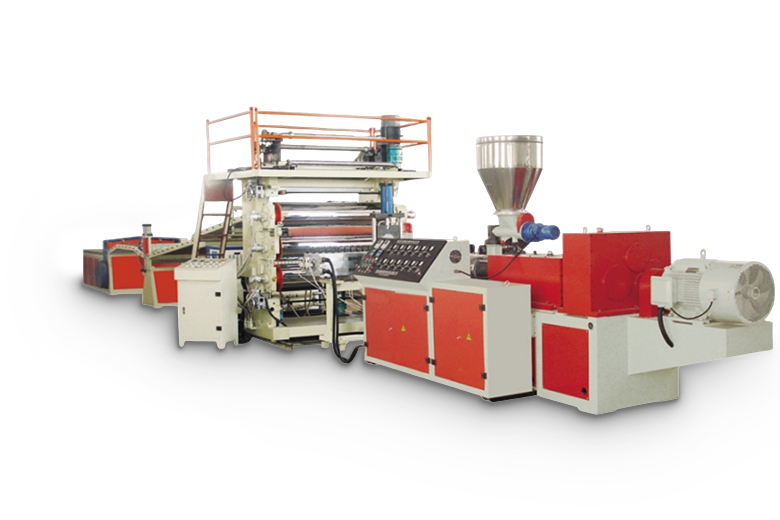
Buyers must carefully compare different equipment architectures before making a capital purchase. Extruder design determines the ultimate success of your manufacturing floor. Conical twin-screw extruders remain the preferred choice for complex UPVC profiles. They provide excellent low-speed shearing capabilities. They naturally build high pressure at the die head. This pressure forces the stiff melt through intricate profile tooling. Parallel twin-screw extruders serve a different purpose. They excel in high-output, long-run applications like simple pipes or flat sheets. You must evaluate a commercial PVC profile extrusion line based on your specific geometric requirements.
Screw and barrel geometry directly impacts material processing. The Length-to-Diameter (L/D) ratio serves as a critical evaluation metric. Standard PVC extruders often utilize ratios between 22:1 and 28:1. You must match the compression ratio of the screw to the bulk density of your compound. PVC dry blends (powders) hold a lot of air. They require a higher compression ratio to squeeze out this trapped air. Pelleted PVC compounds already possess a high bulk density. They require a gentler compression profile. Using the wrong screw design guarantees poor melting and inconsistent outputs.
Venting and degassing efficiency cannot be overlooked during equipment evaluation. Moisture and trapped volatiles destroy profile quality. High-quality extruders feature a dedicated vacuum degassing zone. This zone pulls air, moisture, and chemical off-gases out of the melt. If the vacuum system fails, bubbles form inside the polymer. These bubbles create surface defects, internal porosity, and severe structural weaknesses in the final profile. You must vet the OEM’s vacuum pump capacity and vent port design thoroughly.
A reliable process depends entirely on strict temperature and pressure management. You must master the distinct zones along the extruder barrel. The feed zone initiates the entire process. Consistent volumetric or gravimetric feeding is absolutely crucial. You must maintain strict temperature control at the feed throat. If the throat gets too hot, the PVC powder melts prematurely. It sticks to the walls and causes "bridging." The material stops flowing entirely. This starves the screw and halts production. Operators should monitor feed throat cooling water temperatures continuously.
The compression zone transforms the powder into a homogenous melt. You must understand the mechanics of plasticization. External heater bands do not melt the PVC. The mechanical shear generated by screw rotation creates 70 to 80 percent of the required heat. PVC is highly sensitive to heat. It burns easily if exposed to excessive temperatures. Therefore, you need robust barrel cooling systems. Oil or air cooling fans extract excess shear heat from the barrel. They prevent the polymer from degrading during the compression phase.
The metering zone stabilizes the melt before it enters the die head. It pumps the plastic forward at a consistent volumetric rate. Pressure transducers play a vital role here. They continuously monitor the backpressure at the die head. Melt pressure stability directly correlates to the dimensional accuracy of the extruded profile. If pressure fluctuates, the profile thickness varies. You must utilize closed-loop control systems. These systems automatically adjust screw speeds to maintain a perfectly stable die pressure. This guarantees a uniform product from start to finish.
Even well-designed systems encounter processing issues. Operators must know how to identify and resolve common extrusion defects quickly. You must implement proactive troubleshooting protocols. Here are the most critical implementation risks and their corresponding solutions.
Risk 1: Thermal Degradation (Burn Marks/Yellowing)
Operators frequently spot yellow streaks or black burn marks on the profile surface. This indicates severe thermal degradation. The root cause usually involves excessive residence time inside the barrel. Material stagnates in "dead zones" within the die tooling. It overheats and releases highly corrosive hydrogen chloride (HCl) gas. You must solve this by auditing the internal flow channels of your tooling. Ensure they are highly polished and streamlined. Additionally, verify the accuracy of your PID thermocouples. Faulty sensors often cause the barrel zones to overheat silently.
Risk 2: Surging or Pulsation
Surging occurs when the profile exits the die in uneven bursts. The product dimensions fluctuate wildly. This pulsation stems from inconsistent material feeding. It also happens when external lubrication levels are far too high, causing the melt to slip uncontrollably along the screw flights. Worn screw flights also fail to pump the material steadily. You solve surging by conducting strict material formulation audits. Ensure your powder blending process is consistent. You must also perform regular mechanical tolerance checks on the screw and barrel to detect excessive wear.
Risk 3: Poor Surface Finish (Shark Skin)
A rough, matte, or fractured surface finish ruins the cosmetic appeal of a profile. Industry veterans call this defect "shark skin." It results from melt fracture at the die exit. The polymer surface tears because the melt temperature is too low. It also occurs if the line speed exceeds the polymer's natural relaxation rate. You can resolve this by carefully increasing the die lip temperatures. Slowing down the haul-off speed also helps. Finally, check your calibration unit. Optimizing the vacuum settings ensures the profile skin cools smoothly against the sizing sleeves.
Successful PVC processing requires a deep understanding of polymer behavior and machine mechanics. Decision-makers must follow a strict shortlisting logic when upgrading their facilities. You must audit your primary compound formulations long before speaking to equipment vendors. Define your exact resin K-values, filler loads, and lubricant packages first. Only then can you accurately specify extruder torque, screw design, or cooling capacity for a reliable PVC profile extrusion line. Working backward from hardware to chemistry always yields poor results.
Vendor vetting requires demanding evidence over generic promises. You must advise your purchasing teams to request empirical trial data. Force OEMs to run your specific compound formulation through their test machines. Never accept generic output claims based on idealized resins. Real-world testing exposes equipment flaws before you sign a purchase order.
To improve your immediate operations, take the following action-oriented next steps:
Evaluate your current scrap rates and compare them against the age of your machines.
Schedule a targeted technical audit of your die tooling to locate flow dead zones.
Measure your screw and barrel clearances to establish a baseline for abrasive wear.
Calibrate all pressure transducers and PID temperature controllers to ensure accurate melt management.
A: Twin-screw machines provide positive displacement conveying and lower shear rates at higher outputs. This precise control is absolutely critical for processing heat-sensitive UPVC powder blends. It prevents the material from overheating and degrading, which happens frequently in high-speed single-screw extruders.
A: Higher filler loads reduce your overall compound cost and significantly increase profile stiffness. However, they drastically increase the abrasive wear on the screw and barrel. You require specialized bimetallic screw designs and robust gearbox torque to ensure proper melt fusion without destroying the machine.
A: While highly dependent on the specific formulation and stabilizers used, the typical melt temperature window for rigid PVC remains narrow. It generally falls between 185°C and 195°C. Exceeding 200°C significantly increases the risk of rapid thermal degradation and dangerous HCl gas release.


